United States · The Christmas table
Garlic Rosemary Ribeye Roast for Christmas
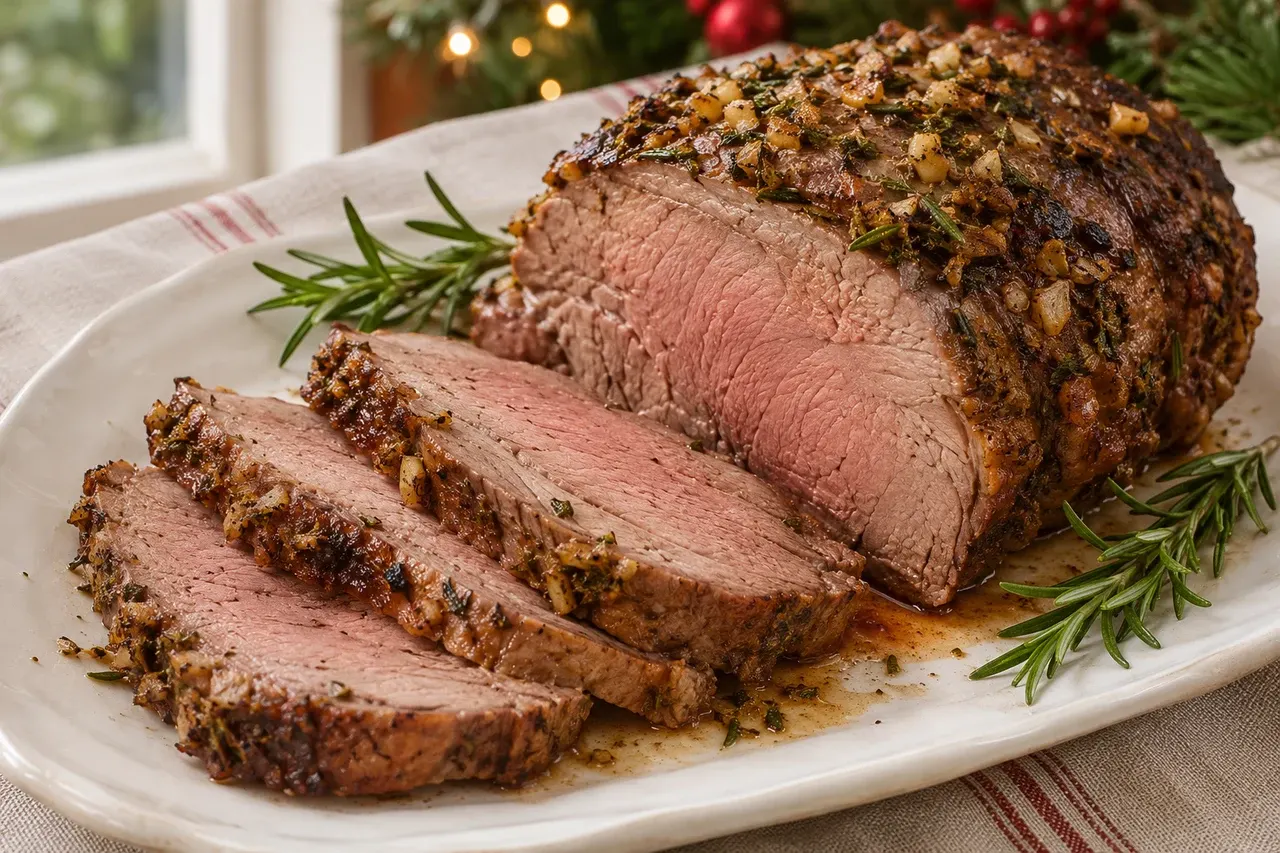
Christmas dinner for six does not need a whole standing rib roast. A compact boneless ribeye gives you a centrepiece that fits a normal roasting pan, plus a useful resting window for finishing the vegetables. This version uses a mustard-free garlic and rosemary rub; the meat and its browned edges do most of the work.
By the MealIdeas.ai editorial team · November 21, 2026
Buy for the people, then plan for the oven
Ask for a 4 lb boneless ribeye roast with a reasonably even thickness. This is a generous purchase for six: the raw weight includes fat and moisture that will be lost during cooking. Bone-in roasts need a different weight allowance, and a long, thin joint will cook differently from a compact one of the same weight.
Ribeye roast and prime rib are closely related cuts; the word “prime” in a recipe name does not guarantee USDA Prime grade. Choose according to your budget and ask the butcher about the actual grade. Do not substitute individual ribeye steaks and use this roast’s timing.
Instacart reported a pronounced Christmas rise in ribeye-roast orders in its 2024 data. That makes the roast a relevant festive choice, not proof that every American household serves it. The practical goal here is a six-person centrepiece you can cook with one oven.
6 servings
The recipe
- Prep
- 20 min
- Cook
- 105 min
- Resting
- 20 min
About 2 hr 25 min, including a 20-minute rest. Roast thickness and your oven can change the cooking time; the thermometer decides when it is ready.
Equipment
Roasting pan with a rack · Instant-read or oven-safe probe thermometer · Carving board with a juice groove
Ingredients
- 4 lb (1.8 kg) boneless ribeye roast, thawed if frozen
- 2 tbsp (30 ml) olive oil
- 4 garlic cloves (about 16 g), finely grated
- 2 tbsp finely chopped fresh rosemary (about 5 g)
- 2 tsp fine sea salt (about 12 g; weigh it if using a different salt)
- 1 tsp freshly ground black pepper (about 2 g)
Allergens: No major allergens in the listed ingredients; check any packaged seasonings and the foods served alongside.
Method
1.Set up the oven
Heat the oven to 450°F (230°C), conventional. Position a rack in the lower middle so the roast sits near the centre. Pat the beef dry with paper towels. Do not rinse it.
2.Make the herb crust
Mix the olive oil, garlic, rosemary, salt and pepper. Rub over the whole roast, then put it fat-side up on the roasting rack. Insert an oven-safe probe into the thickest central part, if using one; keep the tip away from fat pockets.
3.Brown, then reduce the heat
Roast for 15 minutes. Without taking the meat out, reduce the oven to 325°F (165°C). Continue cooking, starting temperature checks after a further 60 minutes. Plan roughly 75–105 minutes after the initial browning, but allow longer if the centre is not ready.
4.Check the centre, not the clock
Before removing the beef from the oven, check several points in the thickest part with a clean thermometer. For the USDA safe-minimum approach used here, the lowest reading must reach at least 145°F (63°C). Do not remove it at a lower temperature and assume resting will make it safe.
5.Rest and carve
Transfer to a clean board and loosely tent with foil for 20 minutes; this exceeds the minimum three-minute rest required with the temperature above. Remove any butcher’s string, slice across the grain and spoon the collected board juices over the slices.
If dinner is at six
Treat this as a planning example, not a timer that can overrule the probe. A cold, thick joint may need longer. Have your side dishes ready to finish while the cooked beef rests.
| Time | What to do |
|---|---|
| 3:30 pm | Preheat; dry the beef and make the rub. |
| 3:50 pm | Start the 15-minute high-heat stage, then reduce to 325°F. |
| 5:05 pm | Begin checking the centre; prepare the serving board and vegetables. |
| Around 5:40 pm | Only if the safe target temperature has been reached, remove and rest the roast. Otherwise move dinner back. |
| During the rest | Finish quick vegetables on the hob. The oven is now free for already-cooked sides that need a short finish. |
| 6:00 pm, or when ready | Carve after resting and serve on warm plates. |
About doneness and leftovers
This recipe uses the USDA minimum of 145°F before removal, followed by resting. That will be more cooked than many restaurant-style rare roast recipes; we do not present a lower-temperature method as equivalent. Colour varies and the illustration is not a doneness chart.
Refrigerate sliced leftovers in shallow containers within two hours, or within one hour if the room is above 90°F (32°C). Use refrigerated cooked beef within three to four days and reheat leftovers to 165°F (74°C). Keep raw-meat utensils away from the carving board and cooked slices.