Canada · The Christmas table
Make-Ahead Christmas Tourtière
The useful part of a Christmas Eve pie is the work you can finish before guests arrive. This tourtière has a gently spiced pork-and-beef filling, a little grated potato to bind the juices, and a double pastry crust. It takes its occasion from the French Canadian réveillon tradition; it is one interpretation, rather than a claim to represent every Québec family’s recipe.
By the MealIdeas.ai editorial team · November 21, 2026
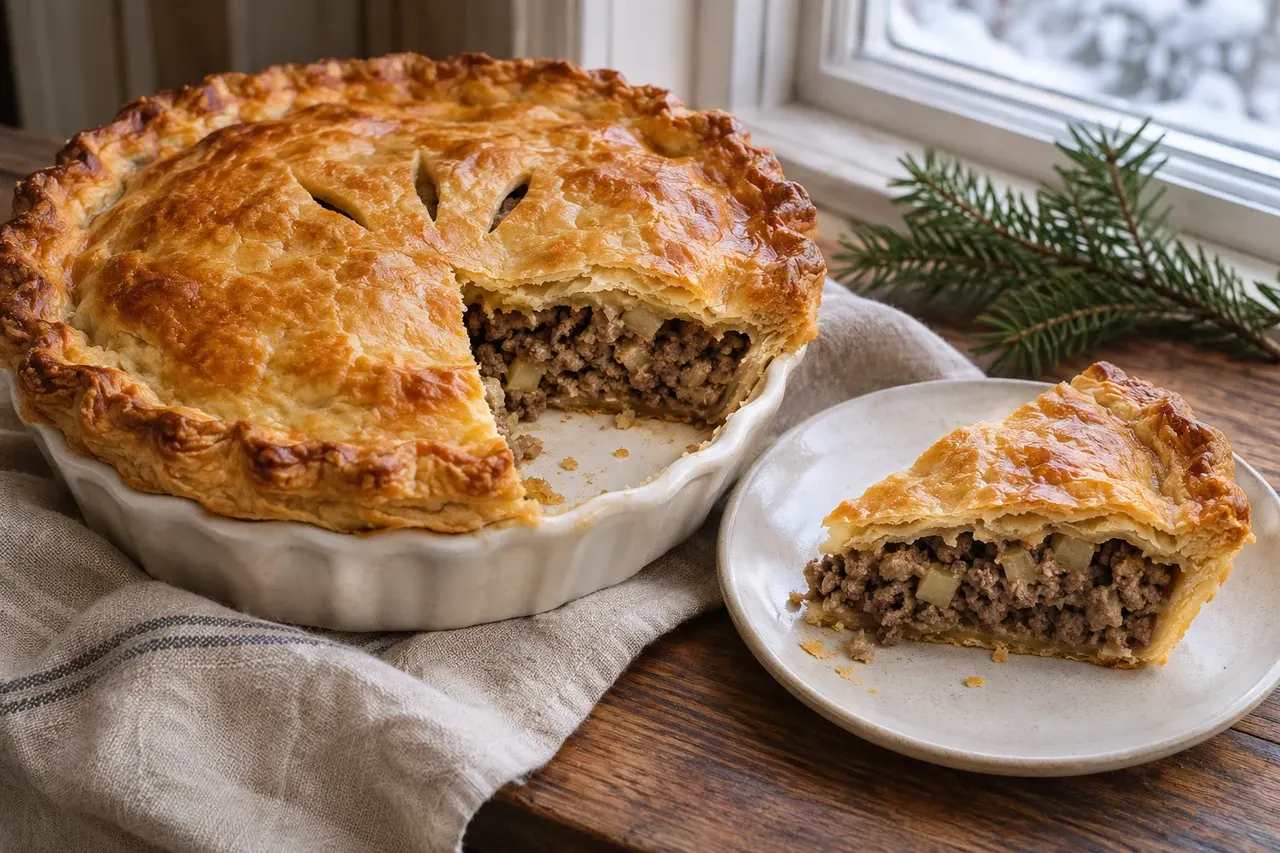
The filling should be cold before the pastry comes out
Tourtière rewards a different kind of preparation from a last-minute roast. The cooked filling is the part to finish first. Warm filling softens pastry fat before the pie reaches the oven; loose cooking liquid can soak the bottom before it has a chance to set.
The grated potato in this version helps bind the stock. Stop reducing when a spoon leaves a clear trail through the pan, but the meat still looks moist rather than fried and dusty. If you see a puddle after cooling, drain that free liquid before filling the pie. This is more useful than adding extra flour to an already-written recipe without adjusting anything else.
Keep the pastry refrigerated while the filling chills. A metal tin and preheated baking sheet help the base receive heat; neither can compensate for pouring a hot, watery filling onto soft pastry.
6 servings · one 23 cm pie
The recipe
- Prep
- 30 min
- Cook
- 80 min
- Cooling and resting
- 80 min
About 3 hr 10 min from scratch: 30 min prep, 25 min filling, 60 min cooling, 55 min baking and 20 min resting. The filling can instead be made the day before.
Equipment
23 cm (9 inch) metal pie tin · Large sauté pan · Shallow container and refrigerator · Food thermometer
Ingredients
- 500 g ground pork
- 250 g ground beef
- 150 g onion, finely diced
- 2 garlic cloves (about 8 g), minced
- 150 g peeled potato, coarsely grated
- 125 ml unsalted beef stock
- 1 tsp dried thyme (about 1 g)
- ½ tsp ground allspice (about 1 g)
- ¼ tsp ground cinnamon (about 0.5 g)
- 1 tsp fine salt (about 6 g)
- ½ tsp ground black pepper (about 1 g)
- 500 g chilled ready-made shortcrust pastry, enough for a base and lid
- 1 egg, beaten, for brushing
Allergens: Wheat and egg; most butter-based pastries also contain milk. Check the pastry and stock labels for additional allergens.
Method
1.Cook the filling
Put the pork, beef and onion in a large pan over medium heat. Break the meat into small crumbs and cook for 10–12 minutes, stirring, until no large clumps remain. Spoon off excess rendered fat, leaving about a tablespoon to keep the filling moist.
2.Bind the juices
Add the garlic, potato, stock, thyme, allspice, cinnamon, salt and pepper. Simmer uncovered for 12–15 minutes, stirring often, until the potato is tender and there is no pool of liquid when you drag a spoon across the pan. Check the mixed-meat filling reaches at least 74°C in several places. If it dries before the potato softens, add a spoonful of water and continue.
3.Cool safely before wrapping
Spread the filling in a shallow container. Refrigerate promptly, loosely covered until chilled, then cover. Allow about an hour, checking that it is completely cold before assembly; a deep container may take longer. Do not leave it on the counter to cool for hours.
4.Line and fill the tin
Heat the oven to 200°C conventional (180°C fan). Roll about three fifths of the cold pastry to roughly 3 mm thick and line the pie tin, leaving a small overhang. Spoon in the cold filling without compressing it tightly. Brush the pastry rim with a little beaten egg.
5.Add the lid
Roll out the remaining pastry. Lay it over the filling, press the edges together and trim and crimp the rim. Cut three steam vents in the centre. Brush the lid with beaten egg, keeping egg off the tin rim so it does not glue the pastry down.
6.Bake and rest
Bake on a preheated metal baking sheet in the lower half of the oven for 45–55 minutes, until the pastry is a deep golden colour and the filling reaches 74°C through a steam vent. Shield the edges with foil if they brown early. Rest for 20 minutes before slicing.
Choose your make-ahead route
For tomorrow: chill the filling separately
Cook and cool the filling in a shallow container, refrigerating promptly and keeping it at 4°C or colder. Make it up to one day ahead for this plan. Leave the pastry wrapped in the fridge. Assemble and bake the next day: this keeps the base away from the filling overnight and preserves the recipe’s baking instructions.
For a later gathering: freeze the baked pie
Bake the pie fully first. Divide leftovers into portions so they cool quickly, refrigerate within two hours, then wrap and freeze once chilled. Label with the date and use within two months for quality. This plan deliberately avoids giving an untested “bake from frozen” time for a whole raw pie.
To serve again: thaw, then reheat
Thaw the covered portions in the fridge. Place on a baking tray, cover loosely with foil and heat in a 180°C conventional oven (160°C fan), checking after 25 minutes. Continue until the centre reaches 74°C; remove the foil towards the end if the crust needs crisping. Time depends on portion size, so use the thermometer rather than a fixed promise. Reheat only the portions you will eat, and only once.
For refrigerated leftovers, follow Health Canada’s two-to-three-day window, counting from the original cooking day. Serve with something bright and simple, such as a sharply dressed green salad; it need not compete with the spice in the filling.