Creamy Stovetop Mac and Cheese
“Forget the box. This homemade mac and cheese is just as easy but a million times more satisfying. Creamy, cheesy, and ready in 20 minutes.”
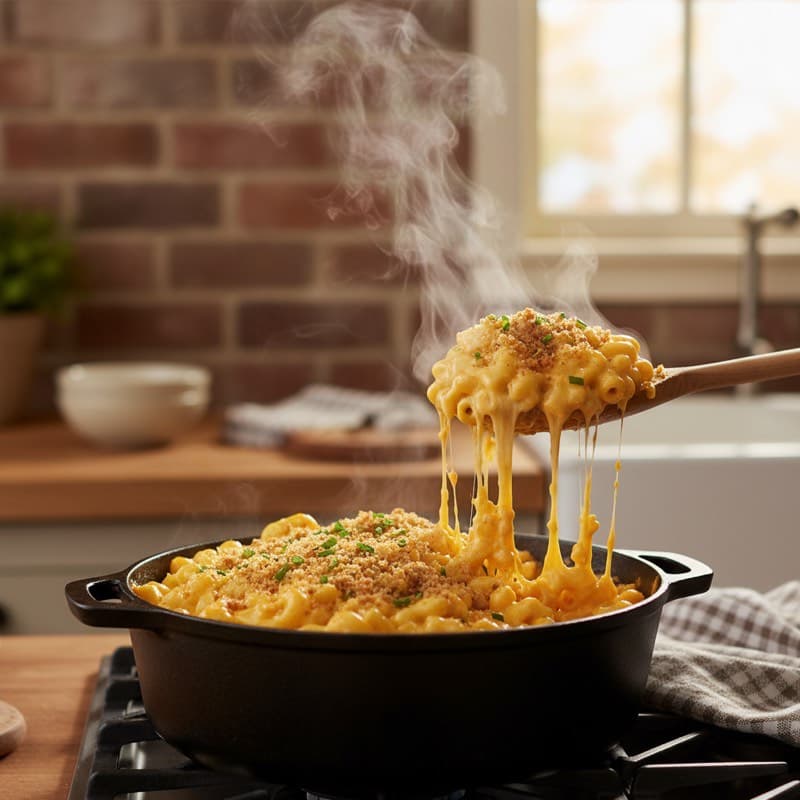
🤖 Why This Recipe Matches Your Mood
Sometimes you need food that requires zero thought and delivers maximum comfort. This creamy mac and cheese is the edible equivalent of a warm hug.
Let's be honest: boxed mac and cheese has its place. But there's something transformative about making it from scratch – the way real cheese melts into a glossy sauce, how the pasta absorbs flavor instead of just wearing it. Homemade mac and cheese takes maybe ten extra minutes compared to the blue box, but the difference is night and day.
This recipe exists because I got tired of fancy restaurant versions that try too hard. Truffle oil, lobster, exotic cheeses – sometimes a dish doesn't need elevation. It needs perfection of the basics. This is that recipe: straightforward, foolproof, and exactly what you're craving when you need comfort without complications.
Why Stovetop Beats Baked (Most of the Time)
Baked mac and cheese has its fans, and I get it – that crispy breadcrumb top is delicious. But here's the truth: baking often dries out the sauce and overcooks the pasta. You end up with something that looks impressive but eats dense and heavy.
Stovetop mac and cheese stays creamy from first bite to last. The sauce clings to every curve of the noodles without becoming gluey. And when you're tired, hungry, or both, the 25-minute timeline is a gift. Save the baked version for potlucks where it needs to travel and sit. For eating right now, stovetop wins.
The Cheese Blend That Changes Everything
Single-cheese mac and cheese is fine. Multi-cheese mac and cheese is transcendent. The secret is combining cheeses with different properties.
Sharp cheddar brings the flavor – that tangy, unmistakable mac-and-cheese taste we all crave. But cheddar alone can turn grainy when melted. That's where gruyère comes in: it melts beautifully and adds nutty depth without overwhelming the cheddar. Some versions add American cheese for extra smoothness, which works if you want maximum creaminess.
The ratio matters: two parts cheddar to one part melting cheese gives you bold flavor with silky texture. And please, shred your own cheese. Pre-shredded contains cellulose (wood pulp) to prevent clumping, which also prevents smooth melting.
The Roux: Your Secret Weapon
A roux – butter cooked with flour – is what separates real cheese sauce from melted cheese on pasta. It thickens the milk into a sauce that actually coats and clings.
The technique is simple but timing matters. Cook the flour in melted butter for one full minute, stirring constantly. This removes the raw flour taste. Then add milk gradually, whisking as you pour. If you dump it all in at once, you'll get lumps.
Watch for the sauce to thicken enough to coat the back of a spoon. This takes about five minutes of gentle simmering. Only then is it ready for cheese. Patience here pays off in texture.
🧠 The Science Behind It
Mac and cheese satisfies on multiple levels. The combination of carbohydrates and fat triggers your brain's reward system – the same reason cookies and ice cream feel so satisfying. But there's more going on.
Cheese contains casomorphins, compounds that have a mild calming effect. It's why cheese cravings are so intense and why mac and cheese often tops 'comfort food' lists across cultures. The warm, soft texture also plays a role, requiring minimal chewing and going down easy when you're stressed or tired.
There's also the nostalgia factor. For many people, mac and cheese connects to childhood, school lunches, family dinners. Eating it as an adult activates those positive memories.
🌍 Cultural Background
Macaroni and cheese has surprisingly aristocratic origins. The earliest recorded recipe appears in a 14th-century Italian cookbook, and Thomas Jefferson famously served a version at a White House dinner in 1802 after encountering the dish in France.
The dish became truly American during the Great Depression when Kraft introduced their boxed version in 1937. At 19 cents per box, it fed families affordably during hard times. Today, Americans consume over 2 million boxes of mac and cheese daily.
But mac and cheese transcends borders. The British have cauliflower cheese, Greeks have pastitsio, and countless cultures have their own version of pasta plus cheese plus comfort.
⚡ Quick Tips Before You Start
- ✓Shred cheese yourself – pre-shredded won't melt smoothly
- ✓Save pasta water before draining to thin the sauce if needed
- ✓Add cheese off the heat to prevent grainy texture
- ✓A pinch of mustard powder boosts cheese flavor invisibly
🍽️ Serving Suggestions
Mac and cheese is satisfying on its own, but pairing it right elevates the meal. A simple green salad with vinaigrette provides crucial contrast – the acidity and crunch balance the richness.
For heartier meals, serve alongside roasted broccoli, steamed green beans, or a tomato salad. The vegetables add nutrition and keep the dish from feeling too heavy.
🍷 Perfect Pairings
A crisp, acidic white wine like Sauvignon Blanc or unoaked Chardonnay cuts through the cheese beautifully. For beer, try a pilsner or wheat beer – something light enough not to compete with the richness.
Kids and non-drinkers do well with apple cider or sparkling water with lemon. The acidity performs the same palate-cleansing function as wine.
I make this recipe at least twice a month. It's become my measuring stick for whether I'm taking care of myself – if I have time to make real mac and cheese instead of opening a box, life is probably okay. Sometimes comfort food is less about the food and more about the act of making it.
— The mealideas.ai Team
📋 Creamy Stovetop Mac and Cheese
📝 Ingredients
- •1 lb elbow macaroni
- •4 tbsp butter
- •1/4 cup all-purpose flour
- •3 cups whole milk
- •2 cups sharp cheddar cheese, shredded
- •1 cup gruyere cheese, shredded
- •1 tsp Dijon mustard
- •1/2 tsp garlic powder
- •Salt and pepper to taste
- •Paprika for garnish
👨🍳 Instructions
- 1
Cook that pasta. The most automatic thing you'll do today.
- 2
Butter melts. The smell alone starts to relax you.
- 3
Flour in, whisk fast. You're making a roux. Fancy word, easy thing.
- 4
Milk goes in slowly. Watch it transform into something silky.
- 5
Patience while it thickens. The magic is happening.
- 6
Cheese avalanche. Watch it melt into golden perfection.
- 7
Pasta meets sauce. Stir and watch it become one beautiful thing.
- 8
Paprika on top because presentation matters, even when you're tired.
💡 Why This Recipe?
Sometimes you need food that requires zero thought and delivers maximum comfort. This creamy mac and cheese is the edible equivalent of a warm hug.
⭐ Pro Tips
- 1Shred your own cheese – pre-shredded cheese contains anti-caking agents that prevent silky-smooth sauce
- 2Don't rinse your pasta after cooking – the starch helps the sauce cling to the noodles
- 3Add a pinch of mustard powder or dijon mustard – it enhances the cheese flavor without tasting like mustard
- 4Warm the milk before adding to the roux – cold milk can cause lumps and takes longer to thicken
🔄 Recipe Variations
- →Baked Mac: Transfer to a baking dish, top with breadcrumbs and extra cheese, bake at 375°F for 20-25 minutes until bubbly
- →Bacon Mac: Add 6 strips of crumbled crispy bacon and a dash of smoked paprika
- →Truffle Mac: Stir in 1-2 tablespoons of truffle oil right before serving for a luxurious upgrade
📦 Storage & Meal Prep
How to Store
Store in an airtight container in the refrigerator for up to 4 days. Mac and cheese reheats best on the stovetop with a splash of milk over low heat. Stirring frequently prevents it from sticking and helps revive the creamy texture.
Make Ahead Tips
Make the cheese sauce up to 2 days ahead and refrigerate separately from the pasta. When ready to serve, cook fresh pasta and gently reheat the sauce with a splash of milk, then combine. This prevents soggy noodles.
🥗 Nutrition Information
Per serving
❓ Frequently Asked Questions
Why did my cheese sauce turn grainy or clumpy?
Grainy sauce usually happens when the heat is too high when adding cheese, or the sauce was boiling. Always remove the pot from heat before adding cheese and stir until smooth. Also, shred cheese yourself – pre-shredded cheese has anti-caking agents that affect texture.
What's the best cheese for mac and cheese?
Sharp cheddar is the classic choice for flavor, but combining it with a good melting cheese like gruyère, fontina, or American cheese creates the creamiest texture. A 2:1 ratio of cheddar to a melting cheese works perfectly.
How do I prevent my mac and cheese from being too thick?
Reserve 1 cup of pasta water before draining – the starchy water helps thin the sauce while keeping it creamy. Add it gradually until you reach your desired consistency. The sauce will also thicken as it cools, so make it slightly thinner than you want.
Can I make mac and cheese ahead of time?
Stovetop mac and cheese is best fresh, but you can make it up to 2 days ahead. To reheat, add a splash of milk and warm over low heat, stirring frequently. For baked mac and cheese, assemble completely and refrigerate unbaked, then add 10-15 minutes to baking time.
🔗 You Might Also Like
🧭 Explore More Meal Ideas
📖 From Our Blog
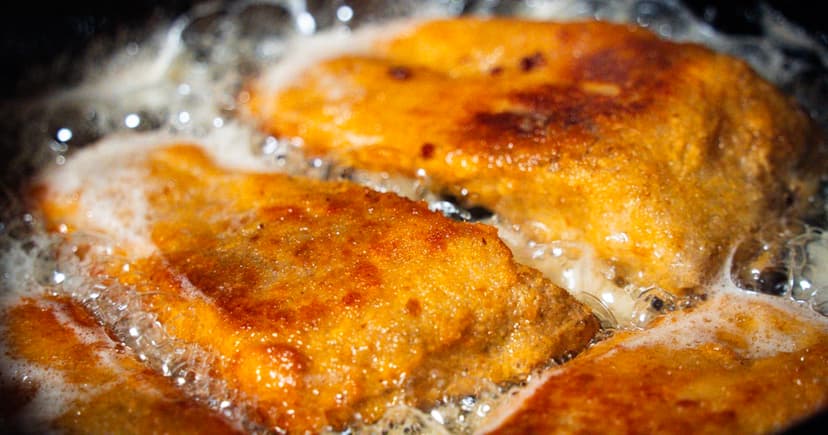
Comfort Food for Rainy Days: 8 Cozy Recipes to Warm Your Soul
Rain tapping on the windows? Here are 8 soul-warming recipes perfect for curling up with on those grey, drizzly days.
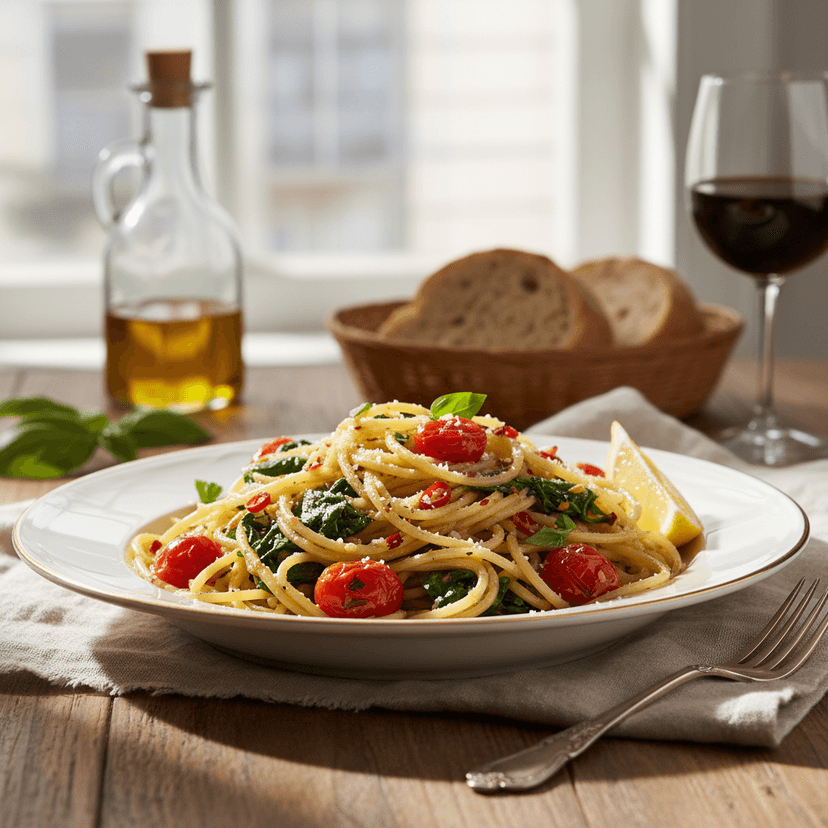
15-Minute Dinners: 10 Fast Recipes for Busy Weeknights
From start to finish in 15 minutes. These recipes prove that fast food doesn't have to come from a drive-through.
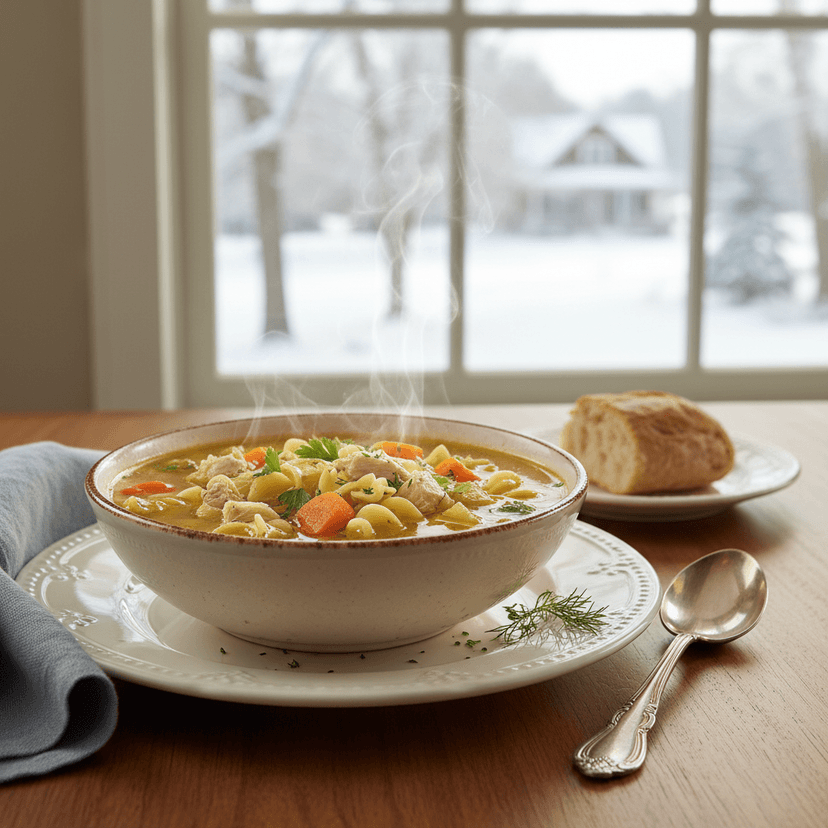
What to Eat When It's Cold: 10 Warming Recipes for Winter Days
When it's freezing outside, you need food that warms your soul. These 10 recipes are designed to make your kitchen smell amazing and keep you cozy all winter long.
Let AI Pick Your Perfect Meal
Tell us your mood, and we'll recommend exactly ONE meal for you. No endless scrolling, no decision fatigue.