Meal Prep 101: The Complete Beginner's Guide to Stress-Free Eating
Ready to transform your eating habits? This complete meal prep guide will show you exactly how to save time, money, and mental energy every single week.
 MealIdeas Team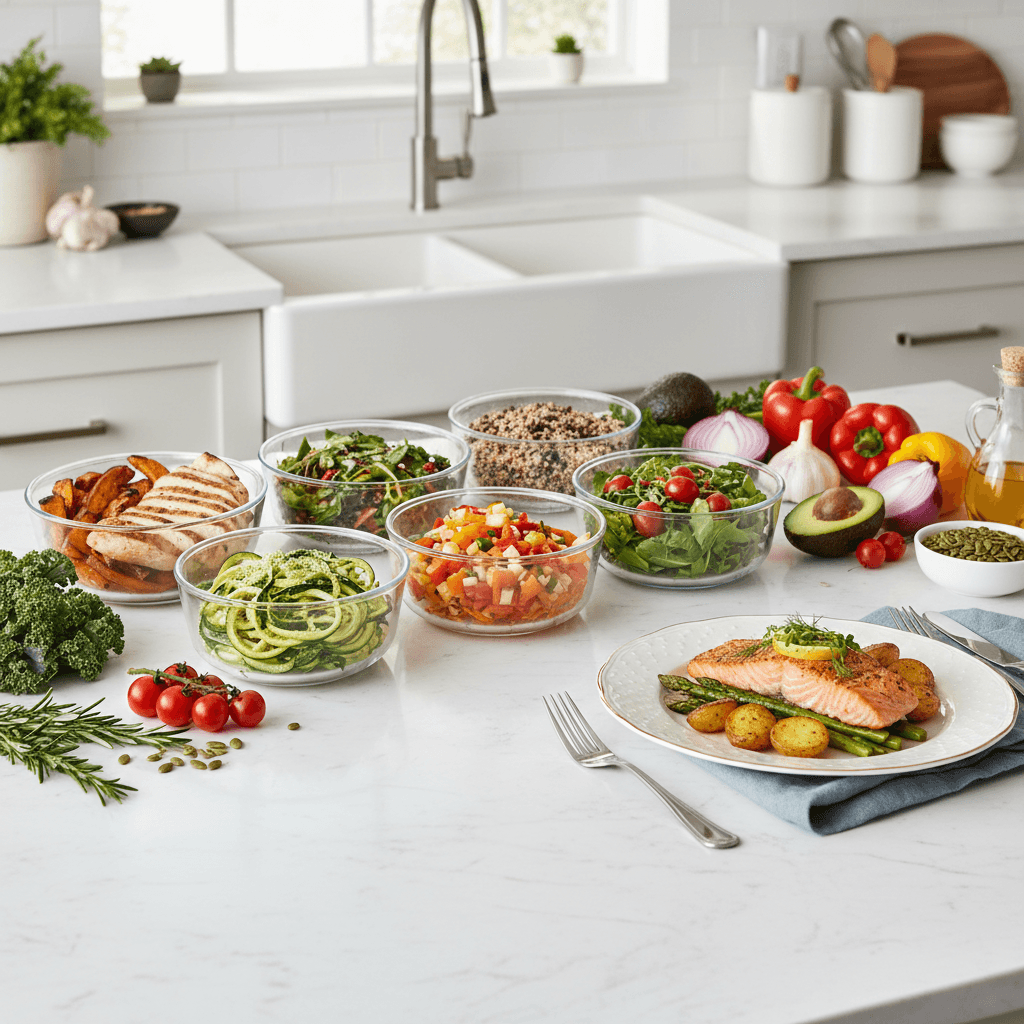
Meal Prep 101: The Complete Beginner's Guide to Stress-Free Eating
You get home after a long day. You're tired, hungry, and the last thing you want to do is figure out what to cook. So you order takeout. Again.
Sound familiar? You're not alone. The average American spends $3,526 annually on takeout – not because they can't cook, but because they're exhausted and decision-fatigued by the end of the day.
That's where meal prep comes in.
Meal prep is the practice of preparing meals or meal components ahead of time – typically over a few hours on the weekend – so that healthy, home-cooked food is ready whenever you need it.
This guide will teach you everything you need to know to start meal prepping successfully, even if you've never done it before.
Why Meal Prep Works: The Real Benefits
Save 6-8 Hours Every Week
Think about how much time you spend each week on food-related tasks:
- Deciding what to eat (15-30 min daily)
- Grocery shopping (multiple trips)
- Cooking from scratch (30-60 min per meal)
- Kitchen cleanup (multiple times)
Meal preppers consolidate all of this into one focused session. Cook once, eat all week.
Save $112+ Per Month
The math is simple:
- Home-cooked meal: $3-5 per serving
- Takeout/restaurant: $12-20 per serving
If you replace just 3-4 takeout meals per week with prepped meals, you're looking at $400+ in annual savings. Most meal preppers save even more.
Eliminate Decision Fatigue
Here's something most people don't realize: deciding what to eat is mentally exhausting.
By the end of a busy day, your brain has made thousands of decisions. The mental energy required to figure out dinner often pushes people toward unhealthy convenience options.
Meal prep removes that friction entirely. Open the fridge, grab a container, eat. No thinking required.
"One of the hardest parts of meal prep is deciding WHAT to cook. That's exactly why we built MealIdeas.ai – to eliminate decision fatigue by suggesting the perfect meal for your current mood."
Eat Healthier (Automatically)
When healthy food is ready and waiting, you eat healthy food. It's that simple.
No willpower needed. No resistance to overcome. The path of least resistance becomes the healthy choice.
What You Need to Get Started
Essential Containers
Glass containers (recommended):
- Microwave, oven, and dishwasher safe
- Don't absorb odors or stains
- Last for years
- Better for the environment
Plastic containers (budget-friendly):
- Lightweight and shatterproof
- Great for grab-and-go
- Replace every 6-12 months
What to buy:
- 10-15 containers in various sizes (1-cup, 2-cup, 4-cup)
- Matching lids that seal tightly
- At least a few glass containers for reheating
Basic Kitchen Equipment
You don't need fancy equipment to meal prep. Here's what actually matters:
Must-haves:
- Large cutting board
- Sharp chef's knife
- 2-3 sheet pans (for roasting)
- Large pot (for grains and soups)
- Large skillet (for proteins and stir-fries)
- Measuring cups and spoons
Nice-to-haves (but not required):
- Instant Pot or slow cooker (hands-off cooking)
- Rice cooker (perfect grains every time)
- Food processor (quick chopping)
- Kitchen scale (portion accuracy)
Pantry Staples
Stock these items and you'll always be ready to prep:
Proteins: Chicken breast, ground turkey, eggs, tofu, canned beans, canned tuna
Grains: Rice, quinoa, pasta, oats
Vegetables: Broccoli, bell peppers, onions, garlic, spinach, sweet potatoes
Flavor builders: Olive oil, soy sauce, hot sauce, spices (garlic powder, cumin, paprika, Italian seasoning), chicken/vegetable broth
The 5-Step Meal Prep System
Follow this system every week for consistent success.
Step 1: Plan Your Meals
Before you cook anything, decide what you're making. Consider:
- How many meals? Most people prep 4-5 lunches and/or dinners
- What proteins? Pick 1-2 to batch cook
- What grains? Choose 1-2 bases
- What vegetables? Select 3-4 varieties
- Any complete meals? Soups, casseroles, or pre-assembled bowls
Planning tip: Check what you already have in the fridge. Build your plan around ingredients that need to be used up.
Looking for inspiration? Check out our 25 Easy Meal Prep Ideas for recipes that actually work.
Step 2: Make Your Grocery List
Once you've planned your meals, list every ingredient you need. Organize by store section:
- Produce
- Meat/protein
- Dairy
- Pantry/dry goods
- Frozen
Shop strategically: Buy proteins in bulk when on sale and freeze what you don't use immediately.
Step 3: Batch Cook Proteins
Proteins take the longest, so start here. While they cook, you can prep other components.
Oven method (easiest for beginners):
- Preheat oven to 400°F (200°C)
- Season proteins simply: olive oil, salt, pepper, garlic powder
- Bake until internal temp reaches safe levels (chicken: 165°F, pork: 145°F)
- Let rest 5 minutes before slicing or shredding
Slow cooker method (even easier):
- Add protein and seasonings the night before
- Cook on low 6-8 hours
- Shred and portion
Step 4: Prep Grains and Vegetables
While proteins are cooking:
Grains:
- Start rice or quinoa (use a rice cooker for hands-off results)
- Cook pasta if making pasta salads
Vegetables:
- Wash and chop everything
- Roast one sheet pan while proteins finish
- Steam quick-cooking vegetables (broccoli, green beans)
- Prep raw vegetables for salads or snacking
Time-saving tip: Roast multiple vegetables on the same sheet pan – just cut them to similar sizes so they cook evenly.
Step 5: Assemble and Store
This is where it all comes together:
For grab-and-go complete meals:
- Portion protein, grain, and vegetables into individual containers
- Add sauces in small separate containers (to prevent sogginess)
- Label with contents and date
For mix-and-match flexibility:
- Store components separately in larger containers
- Build different combinations throughout the week
- More variety, same prep work
Meal Prep Schedule Options
Not everyone has Sunday free. Find the schedule that works for your life.
Option 1: Big Sunday Prep
Time investment: 2-3 hours Best for: People with free Sunday afternoons
Dedicate one session to cooking everything for the week. Put on a podcast or music, make it enjoyable.
Sample timeline:
- 0:00 – Start proteins in oven
- 0:15 – Start rice/quinoa
- 0:20 – Chop all vegetables
- 0:30 – Roast first batch of vegetables
- 0:45 – Flip/check proteins
- 1:00 – Remove proteins, start second veggie batch if needed
- 1:15 – Portion and assemble
- 1:45 – Clean up and refrigerate
Option 2: Split Sessions (Sunday + Wednesday)
Time investment: 1 hour x 2 Best for: People who prefer shorter sessions or worry about food freshness
- Sunday: Prep proteins, grains, and hardy vegetables
- Wednesday: Make fresh salads, prep additional vegetables, adjust portions
Option 3: Daily Mini-Prep (15 Minutes)
Time investment: 15-20 minutes daily Best for: Those who truly can't batch cook
Cook double portions each dinner. Tonight's dinner becomes tomorrow's lunch. Stack small efforts over time.
Storage & Food Safety
Proper storage is essential for food safety and quality.
Refrigerator Storage Times
| Food Type | Fridge (40°F / 4°C) | |-----------|---------------------| | Cooked chicken/turkey | 3-4 days | | Cooked beef/pork | 3-4 days | | Cooked fish | 2-3 days | | Cooked grains | 5-6 days | | Roasted vegetables | 4-5 days | | Raw cut vegetables | 4-5 days | | Hard-boiled eggs | 7 days | | Soups/stews | 3-4 days |
Freezing Tips
Freezing extends meal prep life significantly:
Freezes well:
- Soups and stews
- Cooked proteins (especially shredded/pulled)
- Grains (portion into bags for easy thawing)
- Breakfast burritos
- Casseroles
Doesn't freeze well:
- Salads and raw vegetables
- Dishes with mayo-based sauces
- Pasta with cream sauces (becomes grainy)
- Fried foods (loses crispiness)
How to freeze properly:
- Cool food completely before freezing
- Use freezer-safe containers with tight lids
- Leave headspace for expansion
- Label with contents and freeze date
- Use within 2-3 months for best quality
Reheating Guidelines
- Microwave: Add a splash of water to prevent drying out. Cover loosely.
- Oven/toaster oven: Best for restoring crispiness. 350°F for 10-15 minutes.
- Stovetop: Ideal for grains and stir-fries. Add a little oil or broth.
- From frozen: Thaw overnight in fridge, or defrost in microwave before fully reheating.
7 Common Meal Prep Mistakes (And How to Avoid Them)
1. Prepping Too Much at Once
The mistake: Going from zero to prepping 21 meals in one session.
The fix: Start with 3-5 meals. Build the habit before scaling up.
2. Making Boring, Repetitive Meals
The mistake: Eating the exact same thing five days in a row.
The fix: Prep components separately and vary the combinations. Same ingredients, different meals.
3. Ignoring Food Safety
The mistake: Leaving food out too long, improper storage, eating expired prep.
The fix: Refrigerate within 2 hours of cooking. When in doubt, throw it out.
4. Not Seasoning Enough
The mistake: Bland, underseasoned food that you don't actually want to eat.
The fix: Taste as you cook. Season in layers. Don't be afraid of salt.
5. Skipping Meal Planning
The mistake: Going to the store without a plan and buying random ingredients.
The fix: Always plan before you shop. Even a rough sketch saves time and money.
6. Over-complicating Recipes
The mistake: Choosing elaborate recipes that require 20 ingredients and 15 steps.
The fix: Simple is sustainable. Focus on 5-ingredient-or-less recipes when starting out.
7. Not Making It Enjoyable
The mistake: Treating meal prep as a chore you dread.
The fix: Put on music, invite a friend, pour a glass of wine. Make it something you look forward to.
Meal Prep for Different Goals
For Weight Loss
- Focus on lean proteins and vegetables
- Pre-portion meals to control calories
- Prep healthy snacks to avoid vending machine temptation
- Include volume foods (salads, soups) that fill you up
For Muscle Building
- Prioritize protein at every meal (30-40g per serving)
- Include complex carbs for energy and recovery
- Don't skimp on healthy fats
- Prep post-workout meals that are easy to eat quickly
For Saving Money
- Build meals around inexpensive proteins (eggs, beans, chicken thighs)
- Buy seasonal produce
- Use whole grains instead of processed options
- Batch cook soups and stews – cheap and freezable
For Maximum Time Savings
- Use a slow cooker or Instant Pot
- Buy pre-cut vegetables
- Double recipes and freeze half
- Embrace no-cook options (overnight oats, mason jar salads)
Your First Week: A Sample Plan
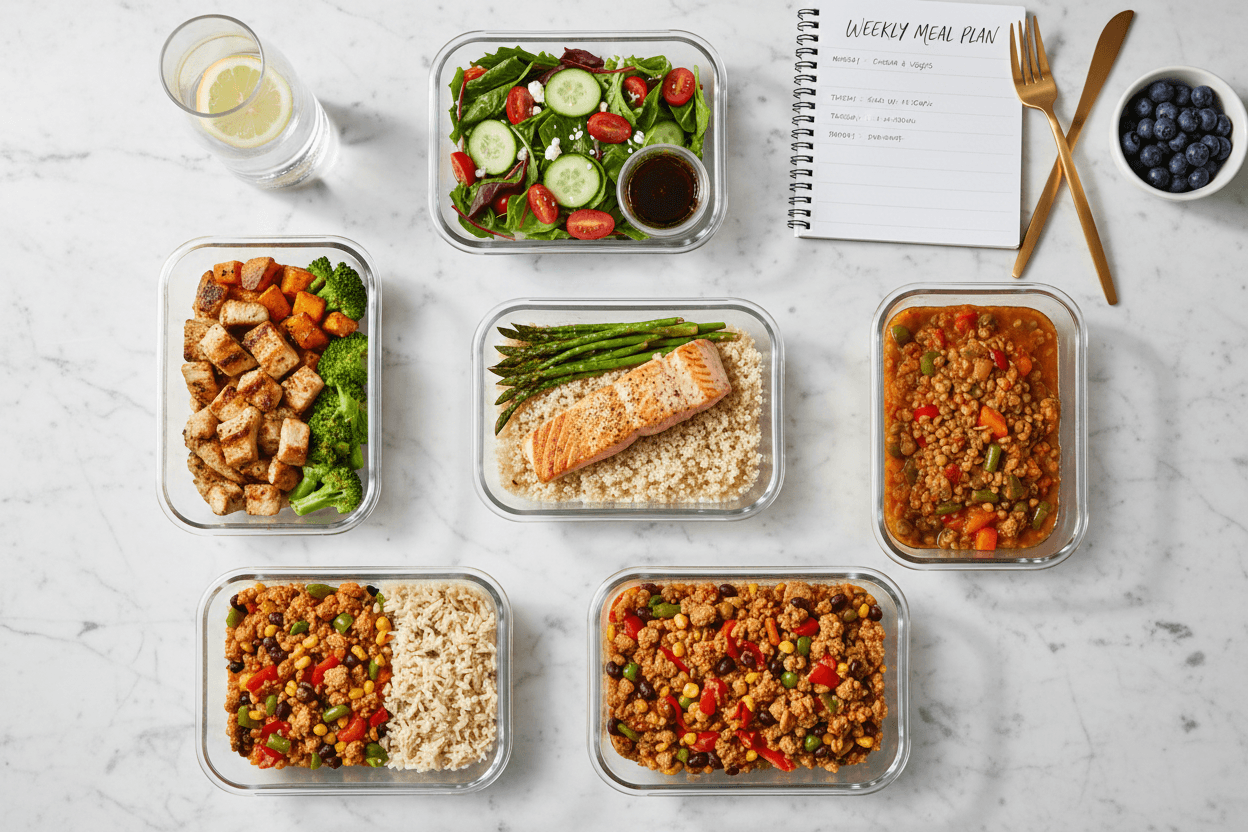
Here's a simple starter plan for beginners:
Prep these components:
- 2 lbs baked chicken breast (seasoned two ways)
- 4 cups cooked rice
- Sheet pan roasted broccoli and bell peppers
- Mason jar salads (4)
- Hard-boiled eggs (6)
Use them like this:
| Day | Lunch | Dinner | |-----|-------|--------| | Monday | Mason jar salad + chicken | Chicken rice bowl + roasted veggies | | Tuesday | Leftover rice bowl | Stir-fry with chicken, veggies, rice | | Wednesday | Mason jar salad + eggs | Chicken over greens + sweet potato | | Thursday | Grain bowl with eggs + veggies | Fresh-cooked (prep buffer day) | | Friday | Mason jar salad + chicken | Eat out or use any leftovers |
Ready to Start?
Meal prep is one of the best investments you can make in your health, wallet, and sanity. The key is starting simple and building from there.
Not sure what to prep this week? That's completely normal. The decision of "what to cook" is often the biggest barrier to getting started.
That's exactly why we created MealIdeas.ai. Tell us how you're feeling – tired, motivated, stressed, adventurous – and our AI will suggest the perfect meals to batch cook based on your mood and energy level.
No more staring at Pinterest boards. No more decision paralysis. Just practical, personalized meal ideas that match exactly where you're at.
Get Your Personalized Meal Prep Ideas →
Looking for specific recipe inspiration? Check out our 25 Easy Meal Prep Ideas that are perfect for beginners.
You Might Also Like
Comments
Comments are not available for this post.