How Meal Prep Actually Works: A Beginner's System for the Whole Week
Skip the Pinterest boards. Here's a real meal prep system that works for beginners — from planning to containers to ingredient reuse across the week.
It's 2 PM on a Sunday afternoon. You're standing in the kitchen with a bag of groceries still on the counter, a phone open to seven different Pinterest recipes, and a sinking feeling that you've been here before.
Last time, you spent four hours cooking, filled a dozen containers with the same chicken-rice-broccoli, ate it for two days, and ordered Thai food by Wednesday. The containers sat in the fridge until Friday when you threw everything out and swore you'd never meal prep again.
I know because I did exactly the same thing. Twice.
The third time, something clicked — not because I found a better recipe, but because I stopped trying to cook meals and started thinking about it completely differently.
The Shift That Changed Everything
Here's what I got wrong every time: I was prepping dinners. Five complete, separate, fully-formed dinners, packaged into boxes like I was running an airline catering service. No wonder it felt miserable.
The approach that actually stuck was embarrassingly simple. Instead of cooking five meals, I cooked ingredients.
That Sunday, I roasted a sheet pan of chicken thighs, made a big pot of rice, roasted two trays of vegetables (broccoli on one, bell peppers and onions on the other), and whisked together two quick sauces — a soy-ginger thing and a simple chimichurri from a bunch of cilantro.
That was it. About 90 minutes of work, and most of that was just waiting for the oven.
But here's what happened during the week.
Monday night I made teriyaki chicken bowls — shredded chicken, rice, broccoli, soy-ginger sauce. Took about three minutes to plate and microwave.
Tuesday I wasn't in a rice-bowl mood. So I threw the same chicken and peppers into tortillas with some cheese and chimichurri. Completely different meal, same ingredients. Maybe five minutes to heat everything and assemble.
By Wednesday I actually wanted something fresh, so I made a quick salad with leftover chicken, raw spinach from the fridge, some of the roasted peppers, and the chimichurri as dressing. No cooking at all.
Thursday I stir-fried the remaining rice with the last of the peppers and onions, cracked two eggs into it, and added soy sauce. Fried rice in ten minutes.
Friday I cooked from scratch — a simple piece of fish with lemon — but I used the last of the roasted broccoli as a side, which meant I only had to actually cook one thing.
Five nights. Five different meals that tasted different, looked different, and felt different. One 90-minute Sunday session.
That's when I stopped thinking of it as "meal prep" and started thinking of it as setting up a kitchen that works for me all week.
How to Set Up Your Own Week
The beauty of this approach is that you don't need recipes. You need a shopping list and about 90 minutes.
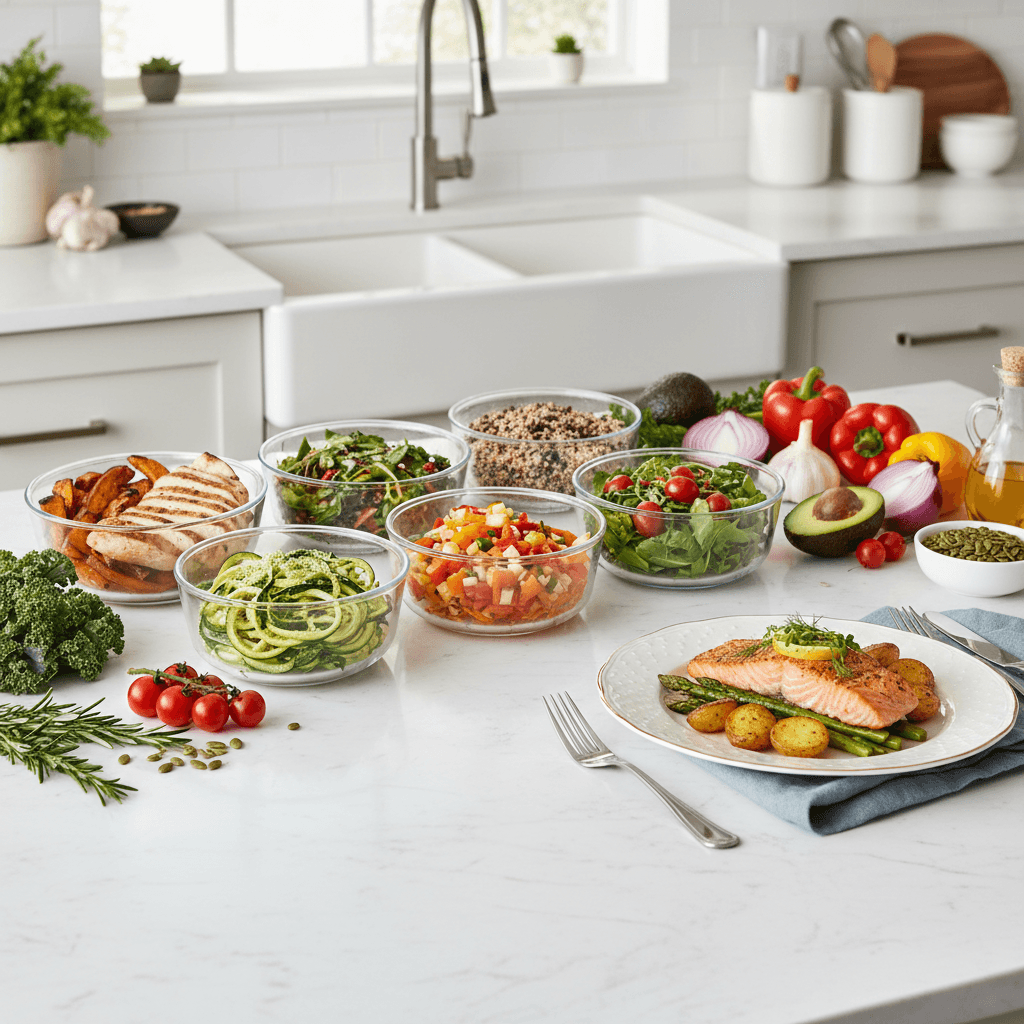
Pick your building blocks. You want two proteins, two grains or starches, two or three vegetables, and one or two sauces. That's your whole list. For my go-to week, that looks like chicken thighs and ground turkey, rice and sweet potatoes, broccoli and bell peppers, and a jar sauce plus something homemade.
Saturday night, take ten minutes to plan. Open your fridge, see what's already there, and fill in the gaps. Your shopping list will be short — maybe eight to ten items. I do one store, one trip. The goal is to be in and out in twenty minutes.
Sunday, work in waves. The first 30 minutes: get the proteins in the oven and the grains on the stove. While those cook, chop and prep your vegetables. Around the 45-minute mark, get the veggies roasting. Use the last stretch to make your sauces and let everything cool. By the 90-minute mark you're cleaning up, and your fridge is stocked with a week of possibilities.
The key mental shift is that you're not deciding what to eat on Sunday. You're giving yourself options for the week. Monday night, you'll look at what's in the fridge, check your mood, and throw something together in minutes. That spontaneity is what keeps it from feeling like you're eating leftovers.
Why People Quit (and How to Not Be One of Them)
I've watched friends try meal prep and abandon it, and it's almost always the same three reasons.
The first is cooking too many things. If you're prepping five or six different proteins and a dozen containers of different meals, you've turned Sunday into a workday. Stick to two proteins, max. The variety comes from how you combine them during the week, not from cooking more on Sunday.
The second is not having sauces. This sounds minor, but it's the difference between eating bland reheated food and eating something that actually tastes good. A simple sauce takes five minutes to make and transforms everything. Chimichurri, a peanut sauce, a quick vinaigrette, a garlic-yogurt drizzle — any of these can make the same chicken and rice taste like a completely different cuisine.
The third is being too rigid. If your plan says "Wednesday is chicken stir-fry" and on Wednesday you want pasta, just... make pasta using your prepped ingredients. The whole point of cooking components is flexibility. There's no meal prep police.
Making It Stick Long-Term
After a few weeks of doing this, something surprising happens: it stops being meal prep and just becomes how your kitchen works. You cook a batch of components on the weekend, not because you "have to meal prep," but because it makes your weeknights effortless.
The part that still requires thought is the planning — deciding what to buy, what overlaps, and what to cook. That ten-minute Saturday planning session is the engine of the whole system, and it's also where most people eventually get lazy and fall off.
That's where MealIdeas.ai comes in. It handles the thinking part — it generates a week plan that's already optimized for ingredient overlap, gives you a shopping list grouped by store section, and even adjusts to your mood during the week. If you're tired on a Tuesday, it'll suggest something easy from what you've already prepped.
You don't need to become a meal prep content creator. You just need a fridge that works for you instead of against you.
Generate your first week plan →
Quick-Start Checklist
If you want to try this next weekend, here's everything you need:
- Pick 2 proteins you like (chicken thighs and ground turkey are a great starting pair)
- Pick 2 grains (rice is mandatory; sweet potatoes, pasta, or quinoa for the second)
- Pick 3 vegetables (at least one that roasts well, one for salads)
- Make 1-2 sauces (start with a store-bought one and one homemade — chimichurri is foolproof)
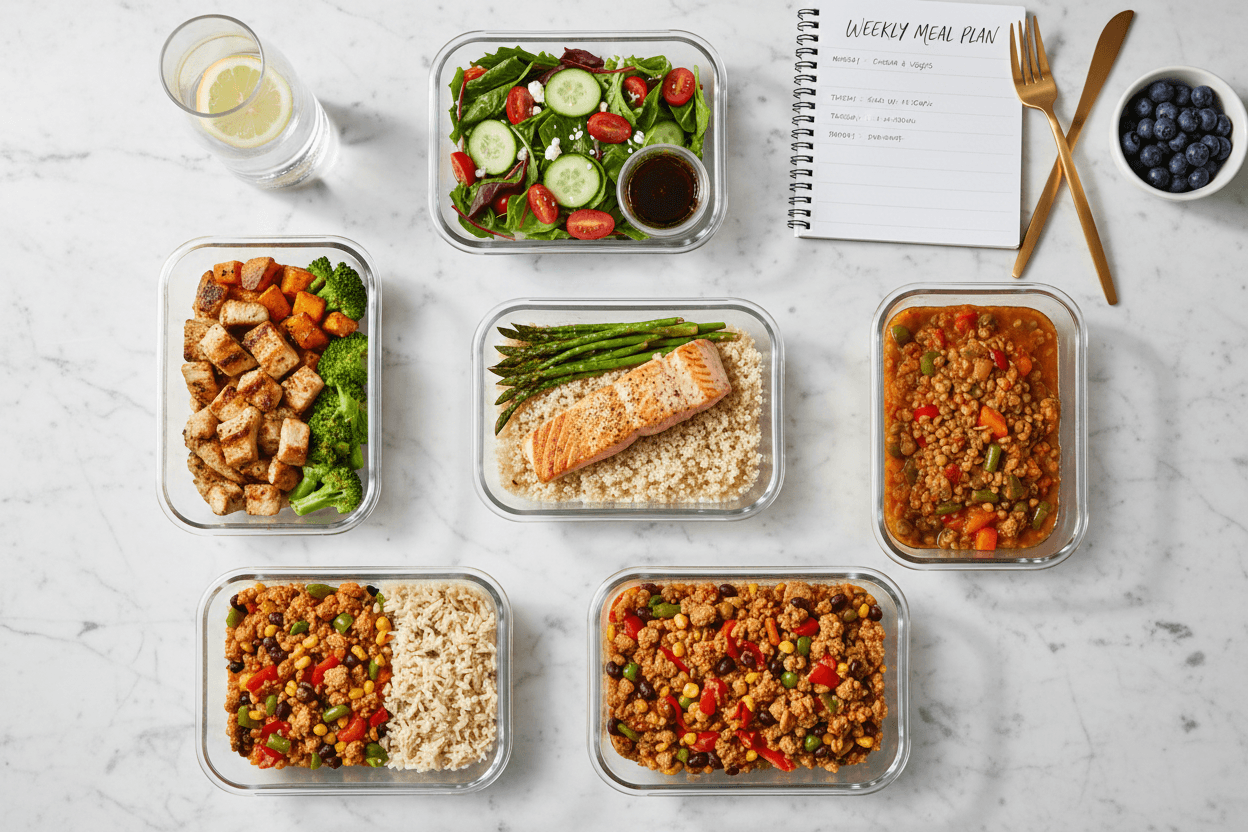
- Buy 8-10 glass containers with lids (don't overthink this — any microwave-safe set works)
- Block 90 minutes on Sunday — put it in your calendar like a meeting
- Don't plan specific meals — just cook the components and trust that you'll figure it out each night
The first week might feel a little awkward. By the third week, you won't remember how you ever cooked any other way.
You Might Also Like
Comments
Comments are not available for this post.