Japanese Beef Gyudon
“Sweet-savory simmered beef over fluffy rice, topped with a silky onsen egg. Japan's favorite fast comfort food, made at home.”
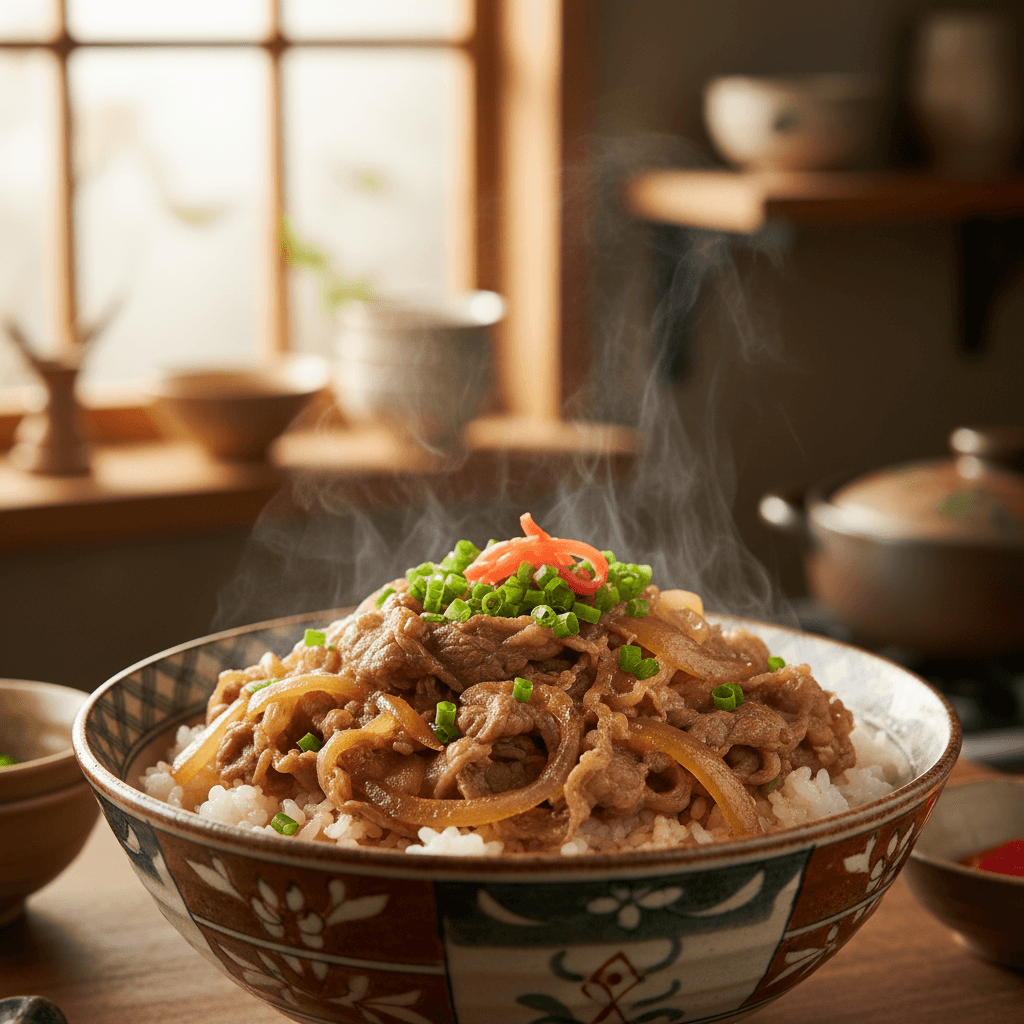
🤖 Why This Recipe Matches Your Mood
When you're exhausted and need nourishment fast, gyudon is the answer. This Japanese comfort food is warm, savory, and satisfying – a bowl of pure comfort that comes together in just 20 minutes.
Gyudon is what happens when a culture perfects fast food. In Japan, this sweet-savory beef bowl is available at chain restaurants twenty-four hours a day, ready in under three minutes, costing less than a fancy coffee. It's worker fuel, student sustenance, late-night salvation.
Making gyudon at home takes just twenty minutes and tastes better than the chains. The beef cooks gently in a soy-mirin-dashi sauce until tender, the onions soften into sweetness, and everything pools over hot rice. Top it with a silky onsen egg, and you've got pure Japanese comfort.
The Art of Thin-Sliced Beef
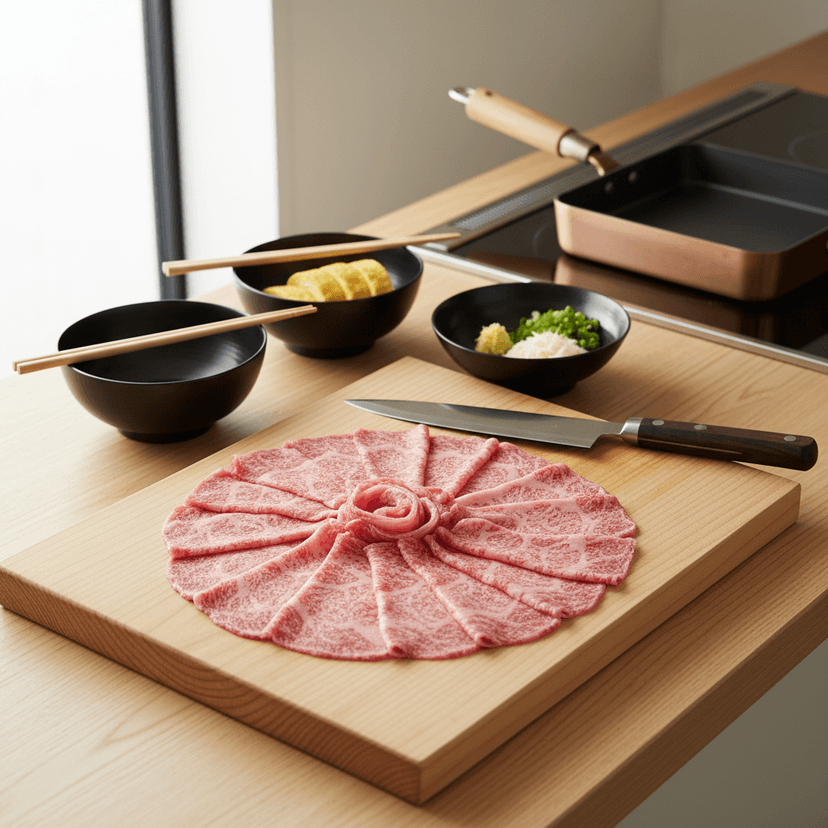
The beef must be sliced paper-thin. This isn't a preference – it's essential to the dish. Thin slices cook in seconds, staying tender rather than turning tough. They absorb the braising liquid thoroughly, meaning flavor in every bite.
Asian supermarkets sell pre-sliced shabu-shabu or sukiyaki beef, which is ideal. If slicing at home, freeze the meat for twenty to thirty minutes until firm but not solid, then use your sharpest knife. Ribeye or chuck roll work well for their marbling.
Understanding the Sauce
Gyudon sauce balances four elements: sweetness from sugar and mirin, salinity from soy sauce, umami from dashi, and a subtle tang from sake. Getting this balance right is the difference between authentic gyudon and generic beef rice.
Dashi is the secret weapon. This Japanese stock made from kelp and bonito flakes provides deep umami that chicken broth can't fully replicate. If using chicken broth as a substitute, add a splash more soy sauce to compensate.
Let the sauce simmer briefly before adding onions. This allows the alcohol in the sake and mirin to cook off, leaving their flavor without any harshness.
The Perfect Onsen Egg
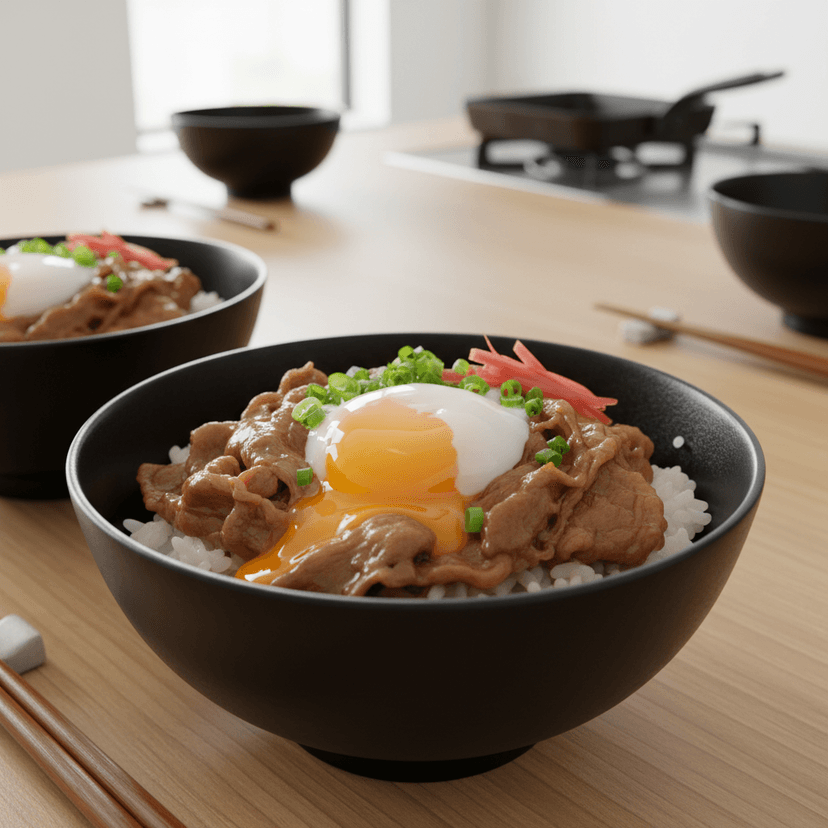
An onsen egg transforms gyudon from good to transcendent. The white is barely set, the yolk silky and flowing. When you break it over the beef and rice, it creates a rich sauce that coats everything.
The technique requires precise temperature: 167°F (75°C) for thirteen minutes. A thermometer is essential. The margin for error is small – too hot and you get a regular soft-boiled egg, too cool and the white won't set.
If you don't have a thermometer, substitute a fried egg with runny yolk. Not traditional, but the runny yolk achieves a similar enriching effect.
🧠 The Science Behind It
Gyudon works because it's engineered for maximum satisfaction with minimal effort. The sweet-savory sauce triggers immediate pleasure responses. The soft onions and tender beef provide comfort. The hot rice absorbs the flavorful braising liquid.
The onsen egg adds richness and interactivity – breaking the yolk and mixing it through the bowl is part of the experience. Everything comes together in a single bowl, simple to eat, deeply satisfying.
This is Japanese efficiency applied to cooking: every ingredient serves a purpose, nothing is wasted, and the result exceeds the simplicity of its components.
⚡ Quick Tips Before You Start
- ✓Use the thinnest beef you can find or freeze and slice thin
- ✓Don't stir the beef too much – let it cook gently
- ✓Make sure rice is hot when serving
- ✓Spoon plenty of braising liquid over the rice
🍽️ Serving Suggestions
Serve immediately while the rice is hot. Gyudon waits for no one – as it sits, the rice absorbs liquid and the eggs continue to set. Provide extra sauce on the side for those who want their rice swimming.
Eat it the Japanese way: hold the bowl close, use chopsticks to mix and lift, let the flavors combine in each bite.
🍷 Perfect Pairings
Traditional accompaniments include pickled ginger (beni shoga) for brightness and shichimi togarashi for gentle heat. A bowl of miso soup on the side makes it a complete meal.
For drinks, cold barley tea (mugicha) is the classic non-alcoholic choice. Japanese beer like Asahi or Sapporo works for those who want alcohol.
I discovered gyudon during late nights in Tokyo, hunched over a steaming bowl at a Yoshinoya after midnight. It was simple, fast, and exactly what I needed. Now I make it at home when I want that same feeling of easy comfort. The house fills with that sweet-savory aroma, and for a few minutes, I'm back in Japan.
— The mealideas.ai Team
📋 Japanese Beef Gyudon
📝 Ingredients
Beef & Onions
- •450g / 1 lb very thinly sliced beef (Note 1)
- •1 large onion, thinly sliced root to stem
Braising Sauce
- •120ml / 1/2 cup dashi (or chicken broth)
- •3 tbsp soy sauce
- •2 tbsp mirin
- •1 tbsp sake
- •1 tbsp sugar (white or light brown)
Rice Base
- •700g / 3 cups cooked Japanese short-grain rice, hot
Onsen Eggs (Note 2)
- •4 large eggs, straight from refrigerator
Garnishes
- •Beni shoga (pickled red ginger)
- •Shichimi togarashi (seven-spice blend)
- •2 green onions, thinly sliced
👨🍳 Instructions
- 1
Start those onsen eggs. Precision temperature means silky perfection – you've got this.
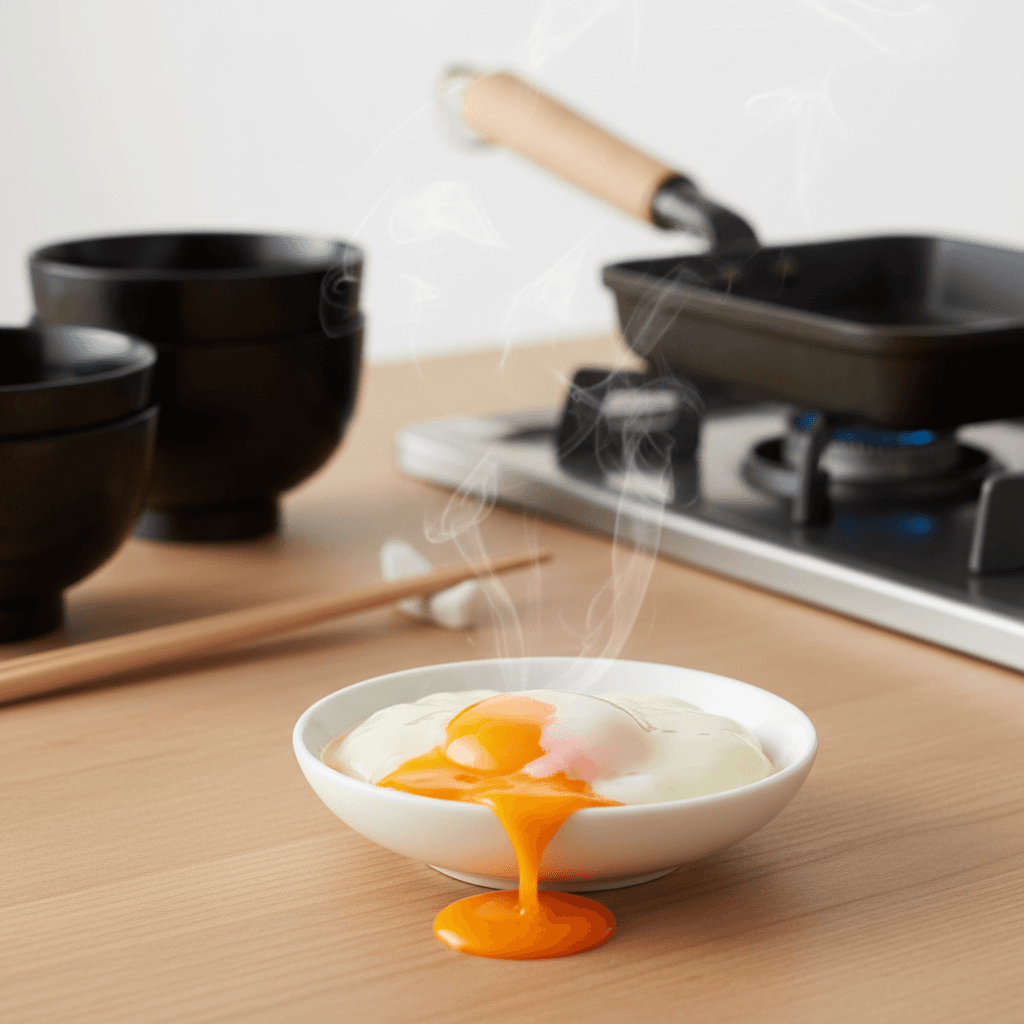
The perfect onsen egg: firm white, silky custardy yolk. - 2
Mix the sauce ingredients. That sweet-savory smell of mirin and soy is instant calm.
- 3
Let those onions soften in the simmering sauce. The kitchen fills with homey aromas.
- 4
The beef goes in – watch it transform in seconds. Japanese cooking at its elegant simplicity.
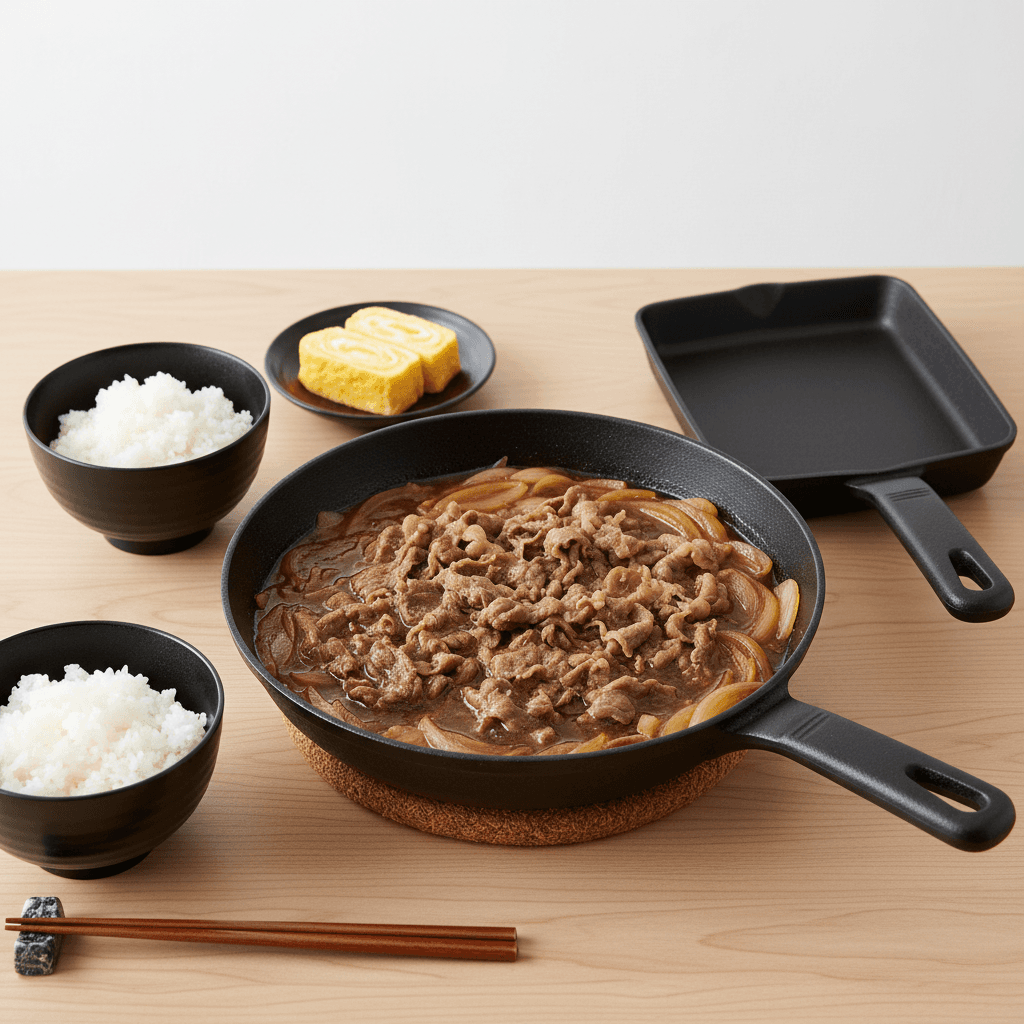
The beef is done when it just loses its pink – don't overcook! - 5
Resist the urge to overcook. Tender is the goal, and you're almost there.
- 6
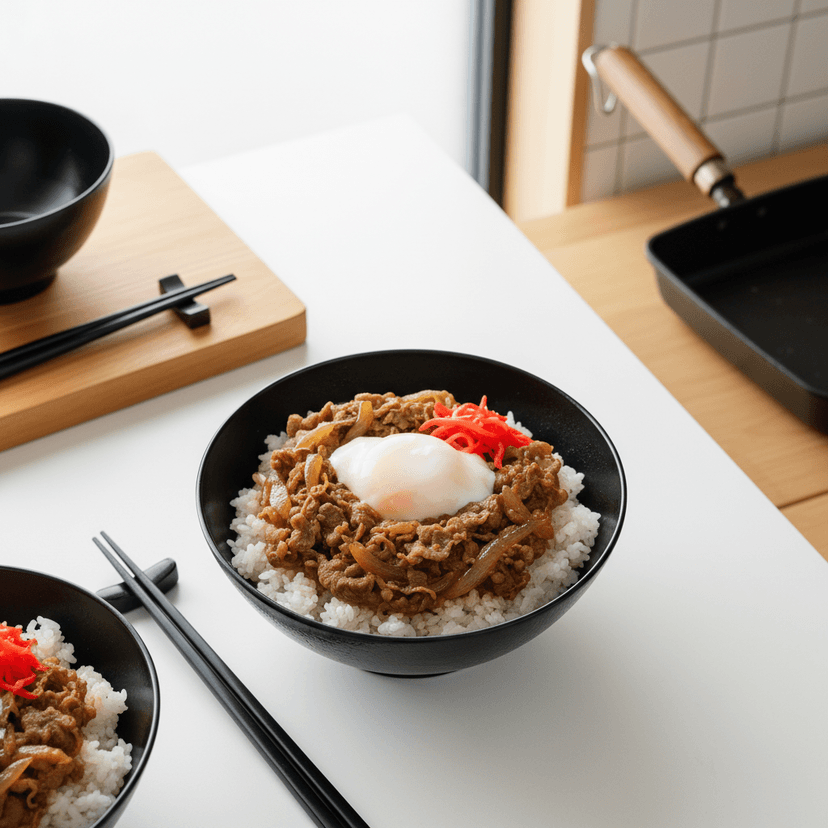
Build your bowl: fluffy rice, saucy beef, and that gorgeous broth pooling at the bottom.
- 7
Crown it with that perfectly wobbly onsen egg. Break it and let the yolk flow.
- 8
One sprinkle of shichimi, and you're holding a bowl of pure Japanese comfort.
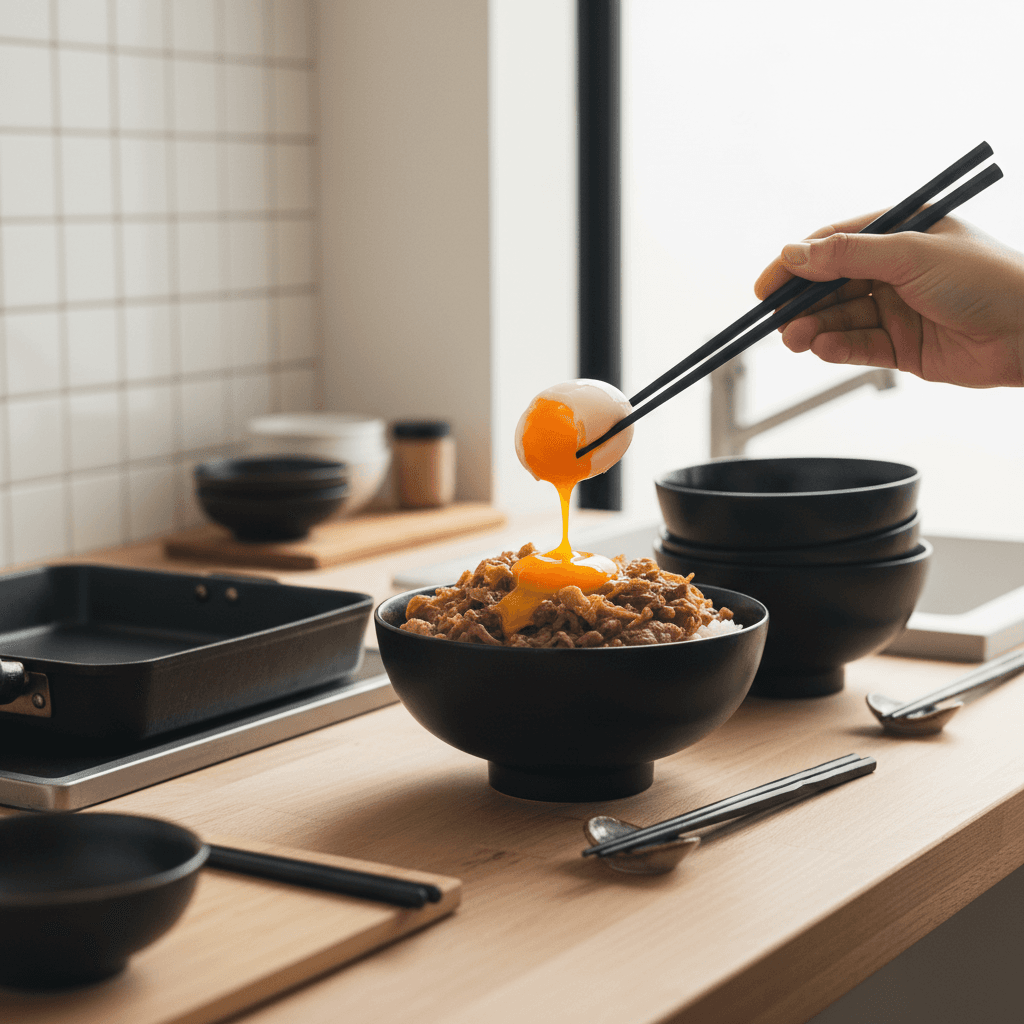
Crown it with that wobbly onsen egg – pure comfort.
📸 More Photos
💡 Why This Recipe?
When you're exhausted and need nourishment fast, gyudon is the answer. This Japanese comfort food is warm, savory, and satisfying – a bowl of pure comfort that comes together in just 20 minutes.
⭐ Pro Tips
- 1Use the thinnest sliced beef you can find – it cooks in seconds and stays incredibly tender
- 2Don't stir the beef too much once added – let it cook gently in the simmering liquid
- 3Make sure your rice is hot when serving – it helps keep everything warm longer
- 4The braising liquid is half the dish – make sure to spoon plenty over the rice
📌 Recipe Notes
🔄 Recipe Variations
- →Gyudon with Cheese: Top with a slice of American or mozzarella cheese for a modern twist
- →Spicy Gyudon: Add gochujang or sriracha to the sauce for a spicy kick
- →Pork Gyudon (Butadon): Substitute thinly sliced pork belly for a richer, fattier version
📦 Storage & Meal Prep
How to Store
Store beef and sauce mixture in an airtight container for up to 3 days in the refrigerator. Rice is best fresh but can be refrigerated separately. Reheat beef gently on the stovetop with a splash of water. Make fresh onsen eggs when serving.
Make Ahead Tips
Slice the onions and beef ahead of time. Mix the sauce and store refrigerated. When ready to eat, the actual cooking takes less than 15 minutes. Not recommended to fully make ahead as the beef is best freshly cooked.
🥗 Nutrition Information
Per serving
❓ Frequently Asked Questions
Where can I buy thinly sliced beef for gyudon?
Look for shabu-shabu or sukiyaki-style sliced beef at Asian supermarkets. Alternatively, ask your butcher to slice ribeye or chuck very thin (about 1/8 inch). You can also partially freeze a steak for 30 minutes to make it easier to slice thin at home.
What if I don't have dashi?
Chicken broth works well as a substitute. For a closer approximation, add a small piece of kombu (kelp) to chicken broth and steep for 10 minutes. You can also use instant dashi powder mixed with water according to package directions.
Can I skip the onsen egg?
Yes! A regular fried egg with a runny yolk is a great alternative. You can also use a poached egg or simply omit the egg altogether. But the silky onsen egg is really special if you can manage it.
What's the difference between gyudon and beef teriyaki?
Gyudon features thinly sliced beef simmered in a sweet-savory dashi-based sauce with onions, served over rice as a bowl. Teriyaki typically involves grilling or pan-frying larger pieces of meat and coating with a glossy, thicker teriyaki glaze.
🔗 You Might Also Like
🧭 Explore More Meal Ideas
📖 From Our Blog
Comfort Food for Rainy Days: 8 Cozy Recipes to Warm Your Soul
Rain tapping on the windows? Here are 8 soul-warming recipes perfect for curling up with on those grey, drizzly days.
5-Ingredient Dinners for Busy Weeknights
The best weeknight dinners aren't complicated. They're five ingredients, one pan, and twenty minutes. Here are the principles behind meals that are simple without being boring.
15-Minute Dinners: 10 Fast Recipes for Busy Weeknights
From start to finish in 15 minutes. These recipes prove that fast food doesn't have to come from a drive-through.
Let AI Pick Your Perfect Meal
Tell us your mood, and we'll recommend exactly ONE meal for you. No endless scrolling, no decision fatigue.