Pasta Carbonara
“The classic Roman comfort food that proves simple can be extraordinary. Eggs, cheese, pork, pasta – four ingredients, infinite satisfaction.”
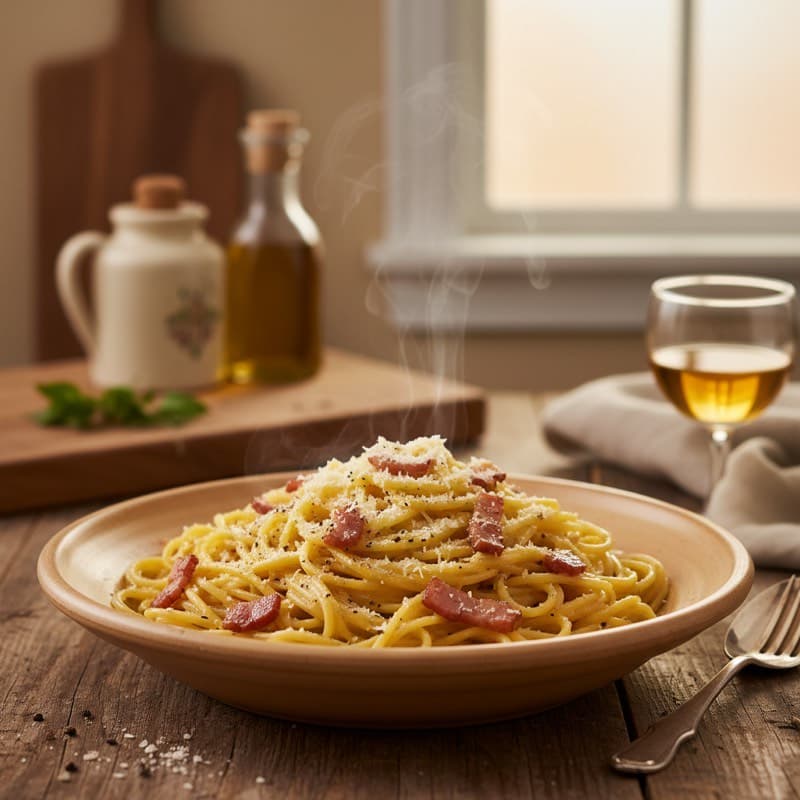
🤖 Why This Recipe Matches Your Mood
When you're exhausted and need maximum comfort with minimal ingredients, carbonara delivers. Creamy, porky, perfectly indulgent – this is the hug you need.
Carbonara is proof that sometimes the simplest things are the hardest to master. Four main ingredients – pasta, eggs, cheese, cured pork – combine into something that tastes far more complex than its parts suggest. No cream (never cream, the Italians would tell you), just eggs emulsifying into silky sauce through technique alone.
I spent years making mediocre carbonara before I understood what I was doing wrong. The dish looks easy. The dish is easy, technically. But the margin between silky perfection and scrambled egg pasta is razor thin. Let me share what took me too long to learn.
The Heat Question (It's Everything)
Here's the secret that will transform your carbonara: you're not cooking the eggs. You're using residual heat to gently warm them while they emulsify with rendered fat and starchy pasta water.
The moment you add your egg-cheese mixture to a hot pan over active heat, you've made scrambled eggs with pasta. Game over. The technique requires removing the pan from heat entirely before the egg mixture touches the pasta.
Toss vigorously while the pan is off the burner. The hot pasta and residual pan heat are enough to warm the eggs to around 150°F – hot enough to thicken but not enough to scramble. If the sauce seems too loose, return to very low heat for seconds at a time, tossing constantly.
Understanding Guanciale
Real carbonara uses guanciale – cured pork cheek. It's fattier than pancetta and has a more intense, funky flavor that defines authentic carbonara. If you've only ever made carbonara with bacon, guanciale will be a revelation.
The fat-to-meat ratio matters here. Guanciale is mostly fat, and that fat renders into the liquid gold that helps emulsify your sauce. Pancetta works as a substitute, though the flavor is milder. Bacon adds smokiness that isn't traditional but certainly isn't bad.
Start guanciale in a cold pan. Adding it to a hot pan causes the exterior to seize before the fat renders properly. Low and slow – let the fat melt out and the meat crisp up. Those crispy pork bits are non-negotiable in great carbonara.
The Cheese Situation
Pecorino Romano – sheep's milk cheese aged until sharp and salty – is the traditional choice for carbonara. It's saltier and more assertive than Parmesan, which is why authentic Roman carbonara has that distinctive bite.
Many recipes call for a mix of Pecorino and Parmesan. This is a reasonable compromise: Parmesan adds nuttiness and melts more smoothly, while Pecorino provides the traditional flavor. Use whatever ratio appeals to you, but include at least some Pecorino.
Grate the cheese yourself, fine as possible. Pre-grated cheese contains anti-caking agents (often cellulose) that prevent the smooth melting crucial for carbonara sauce. This is one case where the extra effort genuinely matters.
🧠 The Science Behind It
Carbonara triggers multiple satisfaction centers. The combination of fat (from pork and eggs), protein, and carbohydrates creates a complete, satiating meal. The richness registers as indulgent while the simplicity feels comforting.
There's also the umami factor. Aged Pecorino Romano is loaded with glutamates, the same compounds that make parmesan, soy sauce, and mushrooms taste 'savory.' Cured pork adds more umami. The combination creates a depth of flavor disproportionate to the ingredient count.
Texturally, carbonara hits the sweet spot of creamy without being heavy. The sauce coats each strand of pasta completely, delivering flavor in every bite without the leaden feeling that cream-based sauces can cause.
🌍 Cultural Background
Carbonara's origins are debated, but most historians place its creation in Rome during or shortly after World War II. One theory credits American soldiers who supplied bacon and eggs to Italian cooks, who transformed those ingredients into something distinctly Italian.
In Rome today, carbonara is a point of pride. Restaurants compete for the title of best carbonara in the city, and locals have strong opinions about what constitutes the 'real' version. No cream, no garlic, no onions, no mushrooms – just eggs, guanciale, Pecorino, black pepper, and pasta. Purists are serious about this.
⚡ Quick Tips Before You Start
- ✓Turn off the heat completely before adding egg mixture
- ✓Save at least 1 cup pasta water – you'll need it
- ✓Start guanciale in a cold pan for proper rendering
- ✓Toss vigorously while adding eggs to prevent scrambling
🍽️ Serving Suggestions
Carbonara is traditionally served as a primo (first course) in Italy, followed by a lighter second course. In American portions, it's a complete meal on its own.
If you want to add a side, keep it simple: a crisp green salad with light vinaigrette, or some roasted vegetables. Nothing should compete with the carbonara itself.
🍷 Perfect Pairings
A dry white wine from the Lazio region (where Rome is located) is traditional – Frascati or similar. Any crisp, unoaked white works well: Pinot Grigio, Vermentino, or Sauvignon Blanc.
For beer, try a pilsner or a light lager. The carbonation cuts through the richness nicely.
Mastering carbonara taught me that technique matters as much as ingredients. The first time I nailed the silky sauce – no scrambled bits, perfect emulsion – I felt like I'd unlocked a cooking achievement. It's a dish that rewards practice and punishes impatience.
— The mealideas.ai Team
📋 Pasta Carbonara
📝 Ingredients
- •1 lb spaghetti
- •8 oz guanciale or pancetta, cubed
- •4 egg yolks
- •1 whole egg
- •1 cup Pecorino Romano, finely grated
- •1/2 cup Parmesan, finely grated
- •Fresh cracked black pepper
- •Salt for pasta water
👨🍳 Instructions
- 1
Salt that pasta water like the sea. This is the only seasoning the pasta gets.
- 2
Cold pan, fatty pork, patience. Watch it render and crisp. This is meditation.
- 3
Whisk those eggs and cheese together. This is your liquid gold.
- 4
Heat OFF. This is crucial. We're making sauce, not scrambled eggs.
- 5
Toss toss toss. Watch it transform into silk. You're basically a wizard.
- 6
Serve it immediately. This is your moment. You made real carbonara.
💡 Why This Recipe?
When you're exhausted and need maximum comfort with minimal ingredients, carbonara delivers. Creamy, porky, perfectly indulgent – this is the hug you need.
⭐ Pro Tips
- 1Save at least 1 cup of pasta water before draining – it's essential for achieving the silky sauce consistency
- 2Use egg yolks only for the richest sauce – whole eggs work but are slightly less luxurious
- 3Start the guanciale in a cold pan and render slowly for maximum crispiness without burning
- 4Toss vigorously and quickly once the egg mixture is added – this prevents scrambling and creates emulsification
🔄 Recipe Variations
- →Carbonara with Peas: Add 1 cup of thawed frozen peas to the pasta for a touch of sweetness and color
- →Spicy Carbonara: Add red pepper flakes when cooking the guanciale, or garnish with chili oil
- →Mushroom Carbonara: Sauté sliced mushrooms separately and add them with the guanciale at the end
📦 Storage & Meal Prep
How to Store
Carbonara is best eaten immediately – the egg-based sauce doesn't reheat well and tends to separate or scramble. If you must store leftovers, refrigerate for up to 1 day and reheat very gently with extra pasta water and a splash of cream.
Make Ahead Tips
This dish comes together in 25 minutes and doesn't benefit from advance preparation. You can crisp the guanciale ahead and set aside, and have your egg-cheese mixture ready. But the final assembly must happen at serving time for the best texture.
🥗 Nutrition Information
Per serving
❓ Frequently Asked Questions
What's the difference between guanciale and pancetta?
Guanciale is cured pork cheek – fattier and more flavorful, traditional for carbonara. Pancetta is cured pork belly, more widely available. Bacon works too but adds a smoky flavor that's not traditional. For authentic carbonara, guanciale is worth seeking out.
How do I prevent scrambled eggs in carbonara?
The key is turning OFF the heat before adding the egg mixture. Toss the hot pasta with the eggs quickly – the residual heat cooks the eggs gently into a creamy sauce. If eggs scramble, the pan was too hot. Work quickly and keep tossing.
Why do I need to use Pecorino Romano?
Pecorino Romano (sheep's milk cheese) provides a sharper, saltier flavor essential to authentic carbonara. Parmesan can substitute but is milder. A mix of both is common. Pre-grated cheese doesn't work as well due to anti-caking agents.
My carbonara sauce is too thick/too thin. How do I fix it?
If too thick, add pasta water a tablespoon at a time while tossing. If too thin, the eggs didn't emulsify properly – try tossing over very low heat briefly while adding more cheese. The pasta water's starch is crucial for the right consistency.
🔗 You Might Also Like
🧭 Explore More Meal Ideas
📖 From Our Blog
Comfort Food for Rainy Days: 8 Cozy Recipes to Warm Your Soul
Rain tapping on the windows? Here are 8 soul-warming recipes perfect for curling up with on those grey, drizzly days.
10 Easy Weeknight Dinners When You're Too Tired to Cook
Too tired to cook? We get it. Here are 10 no-brainer dinner ideas that practically make themselves, perfect for those exhausting weeknights.
What to Eat When It's Cold: 10 Warming Recipes for Winter Days
When it's freezing outside, you need food that warms your soul. These 10 recipes are designed to make your kitchen smell amazing and keep you cozy all winter long.
Let AI Pick Your Perfect Meal
Tell us your mood, and we'll recommend exactly ONE meal for you. No endless scrolling, no decision fatigue.