Creamy Mushroom Risotto
“The Italian classic that's worth every stir. Creamy arborio rice with earthy mushrooms and a finish of butter and parmesan. This is slow food at its finest.”
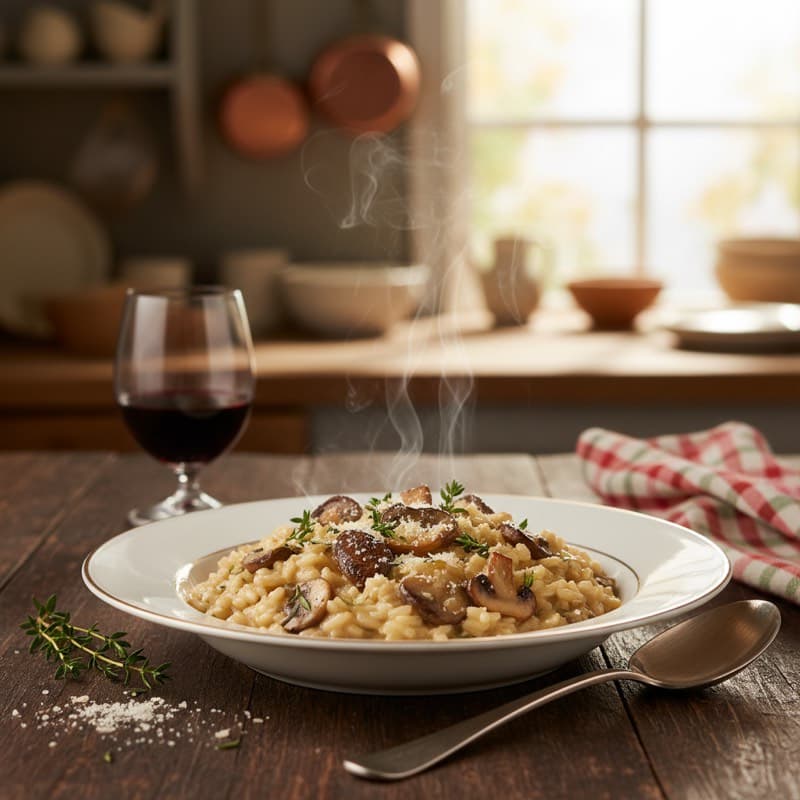
🤖 Why This Recipe Matches Your Mood
There's something meditative about stirring risotto – and the creamy, earthy result is pure comfort. When you want to slow down and treat yourself, mushroom risotto is the answer.
Risotto has a reputation for being difficult, temperamental, requiring constant attention and precise technique. And while there's some truth to that reputation, it's also wildly overstated. Making great risotto isn't hard – it just requires understanding what you're actually doing and why.
Mushroom risotto is the perfect introduction to risotto making. The earthy depth of mushrooms pairs naturally with the creamy, buttery rice, and the technique you learn here translates directly to any risotto variety you want to make afterward.
Understanding Risotto Rice
Not all rice is created equal, and risotto absolutely requires the right variety. Arborio is the most common and widely available. Carnaroli is often called the 'king of risotto rice' for its ability to absorb liquid while maintaining structure. Vialone Nano is traditional for certain regional preparations.
What these varieties share is high amylopectin content – a type of starch that creates creaminess when agitated. Long-grain rice has different starch composition and will never produce proper risotto, no matter how long you stir.
Don't rinse risotto rice. That starch on the surface is essential for the creamy texture you're trying to achieve. Rinsing it away defeats the purpose.
The Ladle Method: Why It Works
Adding broth one ladle at a time seems tedious, but there's science behind this technique. As you stir and add liquid gradually, you're agitating the rice grains against each other, releasing starch into the surrounding liquid. This starch emulsifies with the fat from butter and oil, creating risotto's signature creaminess.
If you dump all the broth in at once, the rice floats freely and doesn't experience the friction needed to release starch. You end up with soggy rice in thin liquid instead of creamy risotto.
The key is patience. Each addition of broth should be almost fully absorbed before you add more. This takes about 18-20 minutes total – there's no shortcut that produces the same result.
The Mantecatura: The Final Magic
The last step of risotto making has a beautiful Italian name: mantecatura. It means vigorously stirring cold butter and cheese into the finished risotto off the heat. This step transforms good risotto into great risotto.
The cold butter emulsifies with the starchy liquid, creating a glossy, cohesive sauce that coats every grain. The cheese melts smoothly into this mixture, adding flavor and additional silkiness. Rush this step or do it over heat, and you risk a greasy, separated mess.
Remove your risotto from heat, add a generous knob of cold butter and a handful of freshly grated Parmesan, and stir vigorously for about 30 seconds. The transformation is visible – the risotto becomes shinier, more unified, more luxurious.
🧠 The Science Behind It
Risotto satisfies on multiple levels. The rice provides carbohydrate comfort – the kind of warm, filling satisfaction that comes from starches. The butter and cheese deliver fat that carries flavor and creates satiety. The mushrooms add umami depth that makes the dish taste more complex than its ingredients suggest.
There's also the process itself. Risotto requires your attention for 20-30 minutes – stirring, watching, adding broth. In our distracted age, this enforced mindfulness can be surprisingly meditative. The dish rewards your presence.
Texturally, properly made risotto achieves what Italians call 'all'onda' – flowing like a wave. It should spread gently on the plate, not pile up stiffly. This fluid creaminess is deeply satisfying to eat.
🌍 Cultural Background
Risotto originated in Northern Italy, where rice paddies have flourished since the 15th century. Unlike Southern Italy's pasta-dominant cuisine, the North embraced rice as a staple, developing risotto into an art form.
Different regions have their signature styles. Milan is famous for risotto alla Milanese, tinted yellow with saffron. Venice favors risotto made with seafood. Lombardy and Piedmont compete over whose mushroom risotto is superior.
Risotto remains one of Italy's most beloved comfort foods, served in humble trattorias and Michelin-starred restaurants alike.
⚡ Quick Tips Before You Start
- ✓Keep broth warm in a separate pot – cold broth shocks the rice
- ✓Toast rice until edges turn translucent for better texture
- ✓Cook mushrooms separately to keep them golden and distinct
- ✓Add butter and cheese off heat for the creamiest finish
🍽️ Serving Suggestions
In Italy, risotto is traditionally served as a primo (first course), followed by meat or fish. In American-sized portions, it works perfectly as a main dish.
A simple arugula salad with lemon vinaigrette provides welcome freshness alongside the richness. Crusty bread is nice but not necessary – the risotto is already quite filling.
🍷 Perfect Pairings
A medium-bodied white wine like Chardonnay (lightly oaked) or white Burgundy pairs beautifully with mushroom risotto. The wine's richness matches the dish without overwhelming it.
For red wine lovers, Pinot Noir's earthy notes complement the mushrooms wonderfully. Barolo or Barbaresco – Northern Italian reds – are traditional regional pairings.
Making risotto was my gateway to understanding that cooking can be meditative. The enforced slowness, the repetitive stirring, the gradual transformation – there's something almost therapeutic about it. Yes, you can't walk away, but sometimes being present with your food is exactly what you need.
— The mealideas.ai Team
📋 Creamy Mushroom Risotto
📝 Ingredients
- •1.5 cups arborio rice
- •8 oz mixed mushrooms, sliced
- •6 cups chicken or vegetable broth, warm
- •1 cup dry white wine
- •1 small onion, finely diced
- •3 cloves garlic, minced
- •1/2 cup parmesan cheese, grated
- •3 tbsp butter
- •2 tbsp olive oil
- •Fresh thyme and parsley
👨🍳 Instructions
- 1
Warm broth ready. This is going to be a journey.
- 2
Mushrooms get golden and gorgeous. The earthy smell is incredible.
- 3
Onion softens, garlic goes in. Building flavor layer by layer.
- 4
Toast that rice. Listen to it click against the pan.
- 5
Wine sizzles in. Take a deep breath – it smells like an Italian kitchen.
- 6
Ladle by ladle, stir by stir. This is meditation. Don't rush it.
- 7
Butter and parmesan make it silky. The mushrooms go back in.
- 8
Serve it immediately. You earned this creamy, dreamy bowl of comfort.
💡 Why This Recipe?
There's something meditative about stirring risotto – and the creamy, earthy result is pure comfort. When you want to slow down and treat yourself, mushroom risotto is the answer.
⭐ Pro Tips
- 1Keep your broth warm in a separate pot – adding cold broth shocks the rice and extends cooking time
- 2Toast the rice until the edges turn translucent (about 2 minutes) – this develops a nutty flavor and better texture
- 3Cook mushrooms separately and add at the end so they stay golden and don't get soggy
- 4The final butter and cheese (called 'mantecatura') should be stirred vigorously off heat to create the creamiest finish
🔄 Recipe Variations
- →Truffle Mushroom Risotto: Drizzle with truffle oil and shave fresh truffle on top if you're feeling fancy
- →Wild Mushroom: Use a mix of chanterelles, porcini, and oyster mushrooms for deeper, earthier flavor
- →Asparagus Mushroom: Add blanched asparagus pieces along with the mushrooms at the end
📦 Storage & Meal Prep
How to Store
Risotto is best enjoyed immediately – it continues to absorb liquid and thickens as it cools. To store, spread on a baking sheet to cool quickly, then refrigerate in an airtight container for up to 2 days. Risotto doesn't freeze well.
Make Ahead Tips
Risotto is famously a last-minute dish, but you can prep components ahead: slice mushrooms, dice onion, grate parmesan, measure everything out. For a restaurant trick, cook risotto 75% of the way, spread on a sheet pan to cool, then finish with remaining broth, butter, and cheese when ready to serve.
🥗 Nutrition Information
Per serving
❓ Frequently Asked Questions
Why do I need to add broth one ladle at a time?
Adding broth gradually allows the rice to release its starch slowly, creating that signature creamy texture without adding cream. If you dump all the liquid in at once, you'll end up with mushy rice in soup rather than creamy risotto.
Can I make risotto without wine?
Yes, substitute with an equal amount of broth plus 1 tablespoon of lemon juice or white wine vinegar. The acid is important for balancing the richness. The flavor will be slightly different but still delicious.
What type of rice can I use for risotto?
Arborio is the most common and widely available. Carnaroli is considered superior for its ability to absorb liquid while staying al dente. Vialone Nano is traditional for some risottos. Never use long-grain rice – it doesn't have enough starch.
Why is my risotto sticky or gluey?
Over-stirring or cooking at too high heat can make risotto gluey. Stir regularly but not constantly – every 30 seconds or so is enough. The heat should be medium, keeping the broth at a gentle simmer, not a rolling boil.
🔗 You Might Also Like
🧭 Explore More Meal Ideas
📖 From Our Blog
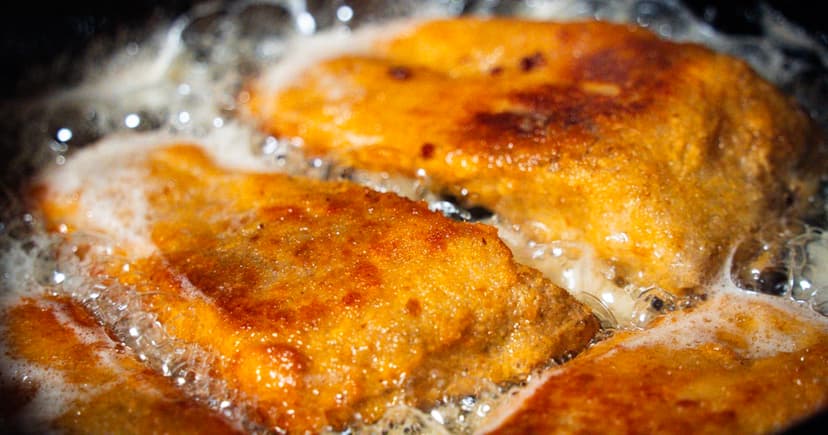
Comfort Food for Rainy Days: 8 Cozy Recipes to Warm Your Soul
Rain tapping on the windows? Here are 8 soul-warming recipes perfect for curling up with on those grey, drizzly days.
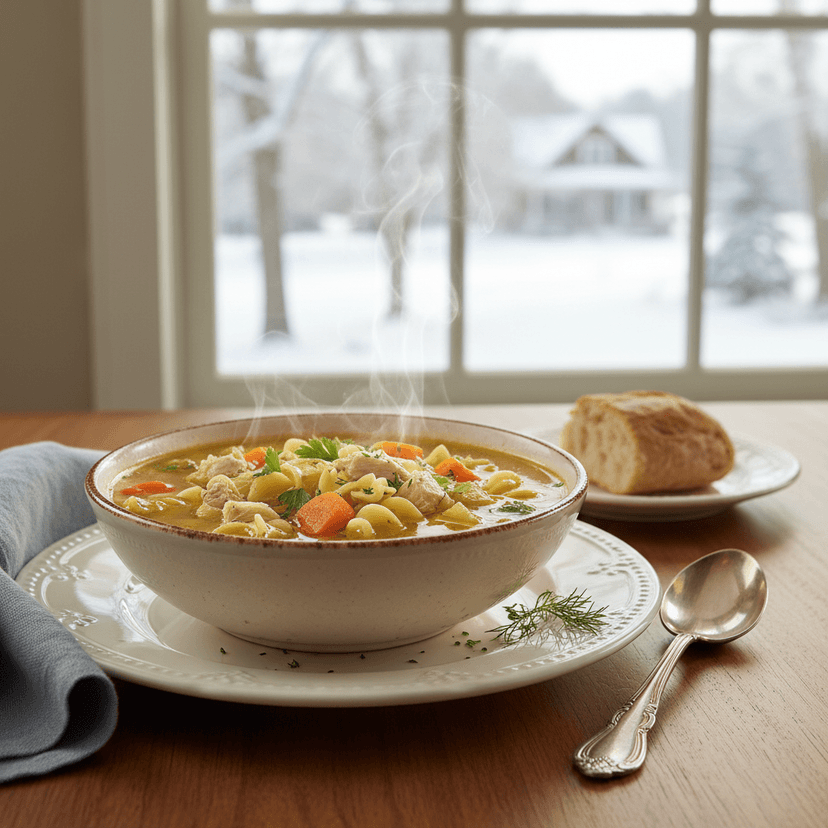
What to Eat When It's Cold: 10 Warming Recipes for Winter Days
When it's freezing outside, you need food that warms your soul. These 10 recipes are designed to make your kitchen smell amazing and keep you cozy all winter long.

Date Night Dinner Recipes: 8 Impressive Meals to Cook at Home
Skip the reservation, impress your date. These 8 recipes deliver restaurant-quality results with home-kitchen simplicity.
Let AI Pick Your Perfect Meal
Tell us your mood, and we'll recommend exactly ONE meal for you. No endless scrolling, no decision fatigue.