Korean Fried Chicken
“Twice-fried for ultimate crispiness, glazed in addictive gochujang sauce. This is the chicken that launched a thousand cravings.”
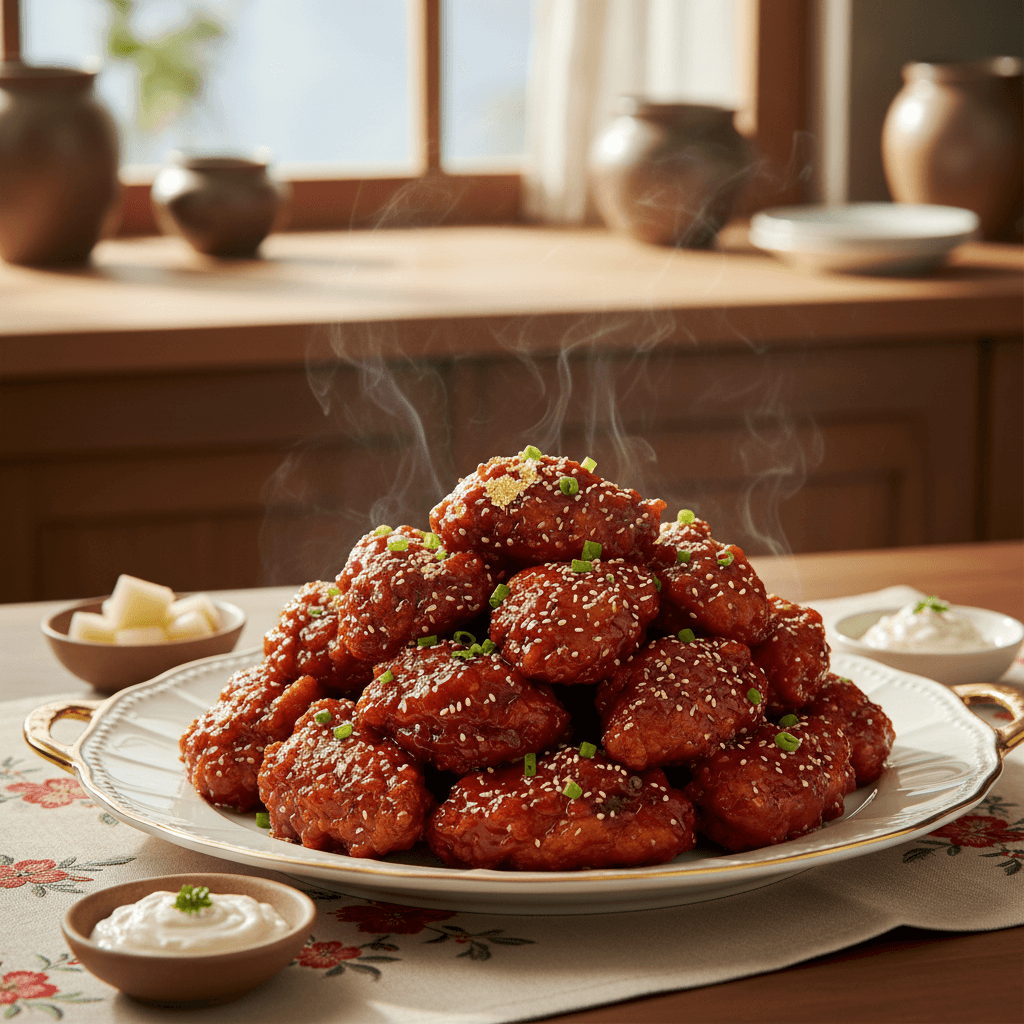
🤖 Why This Recipe Matches Your Mood
When you're ready to celebrate or treat yourself, nothing beats the shatteringly crispy, perfectly sweet-spicy Korean fried chicken. It's a mood-lifting indulgence that makes any moment feel like a party.
Korean fried chicken has a near-religious following, and once you understand what makes it different, you'll understand why. This isn't regular fried chicken with a Korean sauce. It's a fundamentally different approach that produces shatteringly crisp skin that stays crunchy even when drenched in sauce.
The secret? Double frying. First at lower temperature to cook through, then at higher temperature to create an impossibly thin, impossibly crispy shell. It's more work than regular fried chicken, but the results are in a different category entirely.
The Double Fry: Korean Innovation
American-style fried chicken uses a thick, craggly coating that absorbs sauce and loses crunch quickly. Korean fried chicken takes the opposite approach: a thin batter, fried twice, creating a shell so crisp it shatters.
The first fry happens at 350°F for about 10 minutes. This cooks the chicken through and sets the initial coating. Then comes a crucial rest period – 5 minutes that allows moisture to redistribute and the coating to firm up.
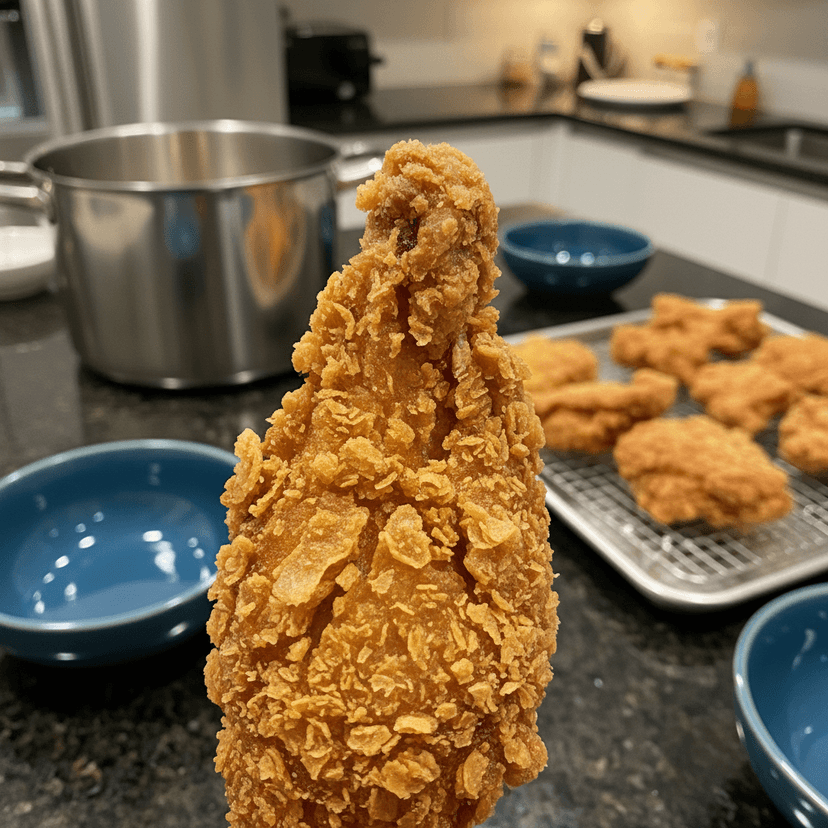
The second fry at 375°F is brief – just 3-4 minutes – but transformative. The higher heat crisps the exterior to an almost glass-like texture. This shell is remarkably resistant to sauce: it stays crunchy for 20-30 minutes even when fully glazed.
The Batter Formula
Korean fried chicken batter is thinner than American versions – more like a coating than a crust. The combination of flour and cornstarch is essential: flour provides structure while cornstarch creates that signature crispiness.
The water must be ice-cold. Cold liquid creates a lighter, crispier coating because it doesn't activate the gluten in flour as much. Some recipes use vodka for the same reason – alcohol evaporates faster than water, creating an even lighter result.
Baking powder adds a subtle lift and helps with browning. The final batter should be thin – about the consistency of heavy cream, not pancake batter.
Gochujang: The Soul of the Sauce
Gochujang – fermented Korean red pepper paste – provides the distinctive sweet-spicy-savory flavor of yangnyeom (seasoned) chicken. It's not just heat; there's depth from fermentation, sweetness from rice, and complexity that plain chili sauce can't match.
The sauce balances gochujang's intensity with honey for sweetness, soy sauce for salt and umami, rice vinegar for brightness, and sesame oil for nuttiness. Fresh garlic and ginger add aromatic sharpness.
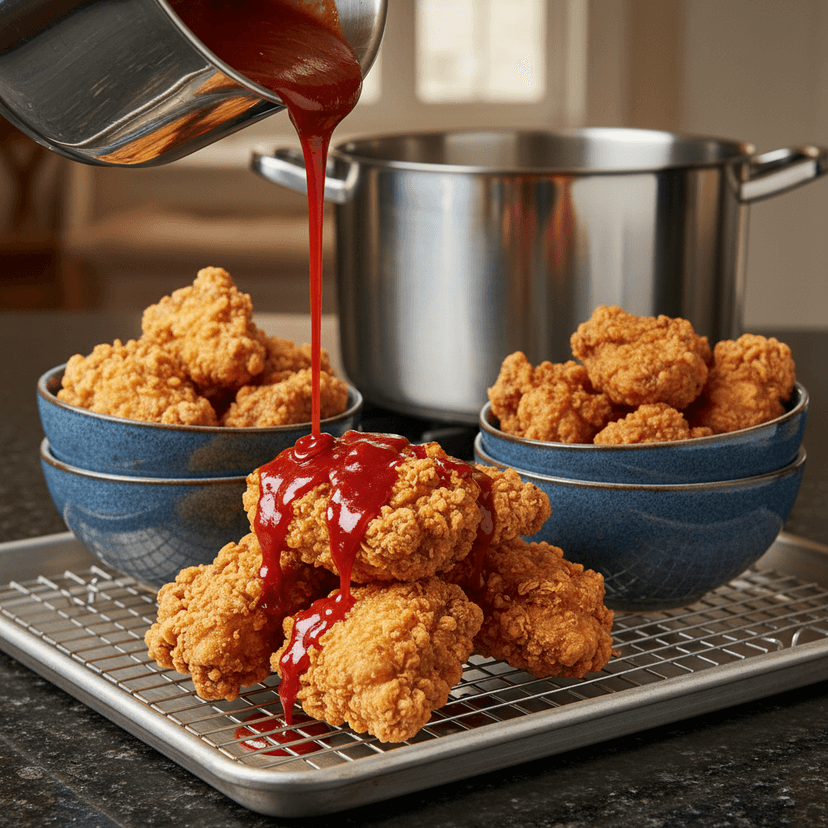
Cook the sauce briefly to meld flavors and thicken slightly, then toss with hot chicken immediately. The heat helps the sauce adhere to the craggy coating. Serve fast – every minute that passes is crunch lost.
🧠 The Science Behind It
Korean fried chicken satisfies because it delivers on every promise. The crunch is audible. The sauce is perfectly balanced between sweet, spicy, and savory. The chicken itself is juicy because the coating protects it from drying out.
The experience matters too. Pulling apart crispy chicken, sauce dripping, sesame seeds scattering – it's interactive and slightly messy in a satisfying way. It's meant to be eaten with hands, often with friends, often with beer.
There's also the achievement factor. Making restaurant-quality Korean fried chicken at home feels like accomplishing something. When it works – and it will work if you follow the technique – you've earned the right to brag a little.
🌍 Cultural Background
Korean fried chicken emerged in South Korea in the 1970s and 1980s, influenced by American fried chicken but adapted with local techniques and flavors. The double-frying method may have been borrowed from Japanese karaage traditions.
By the 2000s, Korean fried chicken became a cultural phenomenon, with dedicated chicken-and-beer restaurants (chimaek) becoming social hubs. The phrase 'chimaek' – chicken plus beer – entered the Korean lexicon as a lifestyle concept.
Global spread accelerated in the 2010s through K-pop culture and Korean drama exports. Today, Korean fried chicken restaurants exist in every major city worldwide.
⚡ Quick Tips Before You Start
- ✓Pat chicken completely dry before battering
- ✓Use ice-cold water in the batter
- ✓Rest chicken 5 minutes between fries
- ✓Sauce and serve immediately
🍽️ Serving Suggestions
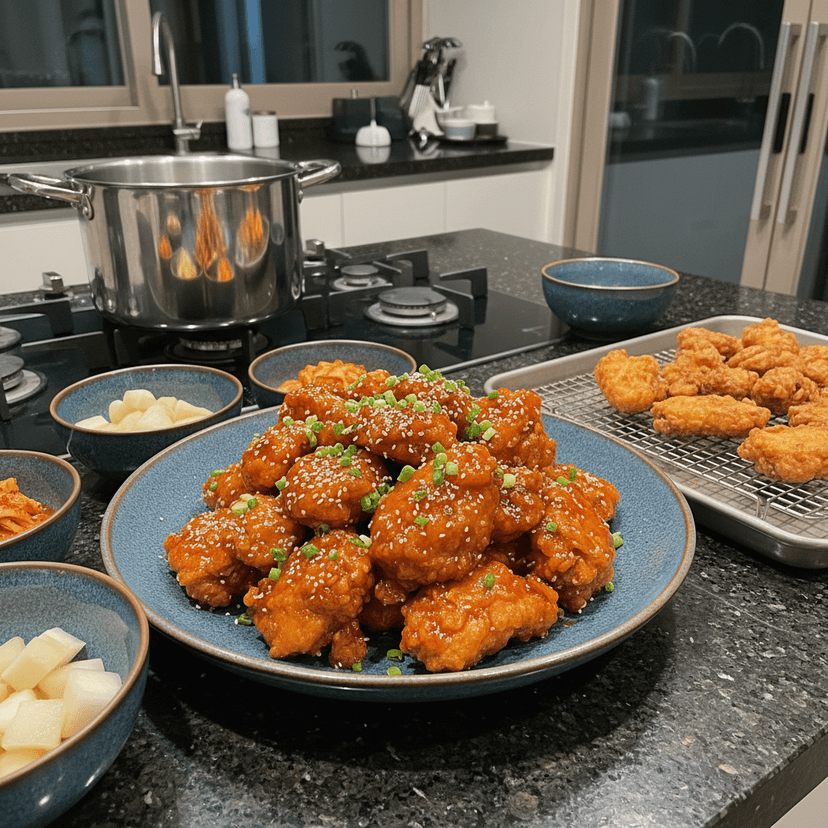
Korean fried chicken is traditionally served with pickled radish (danmuji) – the acidity and crunch provide essential contrast to the rich, saucy chicken. Coleslaw serves a similar function in Western contexts.
Serve immediately after saucing, while the crunch is at peak. Have plenty of napkins ready – this is delicious but messy eating.
🍷 Perfect Pairings
Beer is the traditional and possibly mandatory pairing – cold lager or pilsner works best. The carbonation cuts through the richness, and the cold temperature contrasts with hot chicken.
For non-alcoholic options, sparkling water or Korean barley tea provides similar refreshment. Avoid sweet drinks; the sauce already provides sweetness.
Making Korean fried chicken at home took me from ordering it weekly to making it monthly. The process is meditative – watching oil temperature, listening for the right sizzle, timing each batch. When you nail it, the pride is real. This is the recipe I make when I want to impress without showing off.
— The mealideas.ai Team
📋 Korean Fried Chicken
📝 Ingredients
Chicken
- •1kg / 2 lbs chicken wings or drumettes, patted very dry (Note 1)
Batter
- •120g / 1 cup all-purpose flour
- •60g / 1/2 cup cornstarch
- •1 tsp baking powder
- •1 tsp fine salt
- •1/2 tsp black pepper
- •240ml / 1 cup ice-cold water
For Frying
- •Vegetable or peanut oil (enough for 3 inches / 7cm depth)
Gochujang Sauce (Note 2)
- •4 tbsp gochujang (Korean red pepper paste)
- •3 tbsp honey
- •2 tbsp soy sauce
- •1 tbsp rice vinegar
- •1 tbsp sesame oil
- •4 cloves garlic, minced
- •2.5cm / 1 inch fresh ginger, grated
Garnish
- •2 tbsp toasted sesame seeds
- •3 green onions, thinly sliced
👨🍳 Instructions
- 1
Pat that chicken dry – this is the secret to crispiness that'll make you proud.
- 2
Mix up that batter. Feel the cold water hit the flour – chemistry is about to make magic happen.
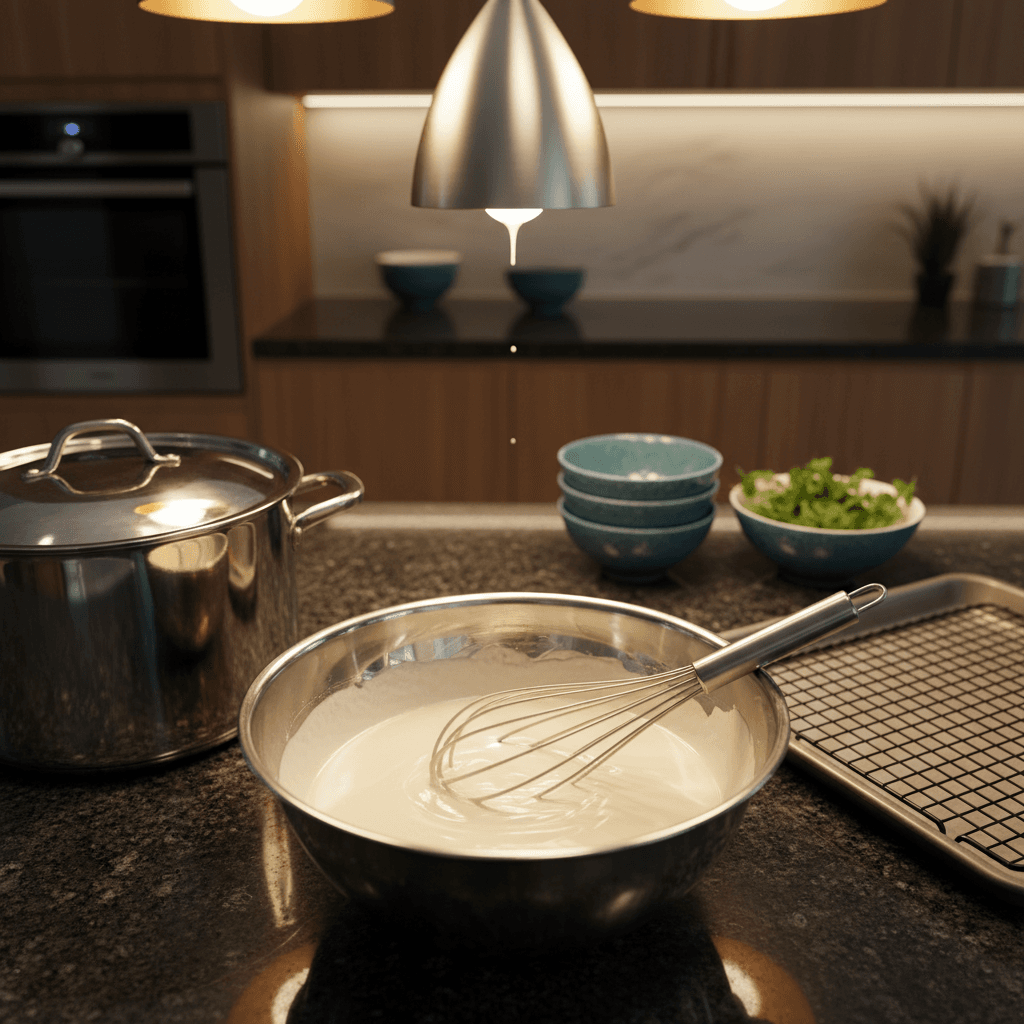
The batter should be thin – about the consistency of heavy cream. - 3
Watch that oil shimmer at the perfect temp. You're in control of deliciousness.
- 4
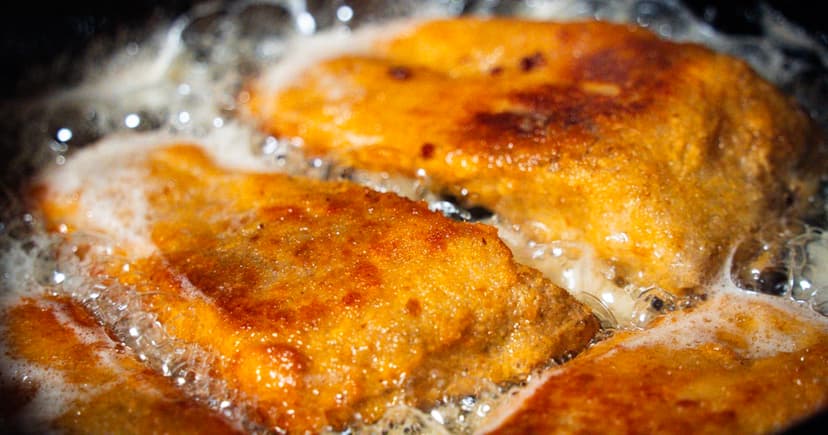
Lower the chicken in gently. That sizzle? That's the sound of transformation.
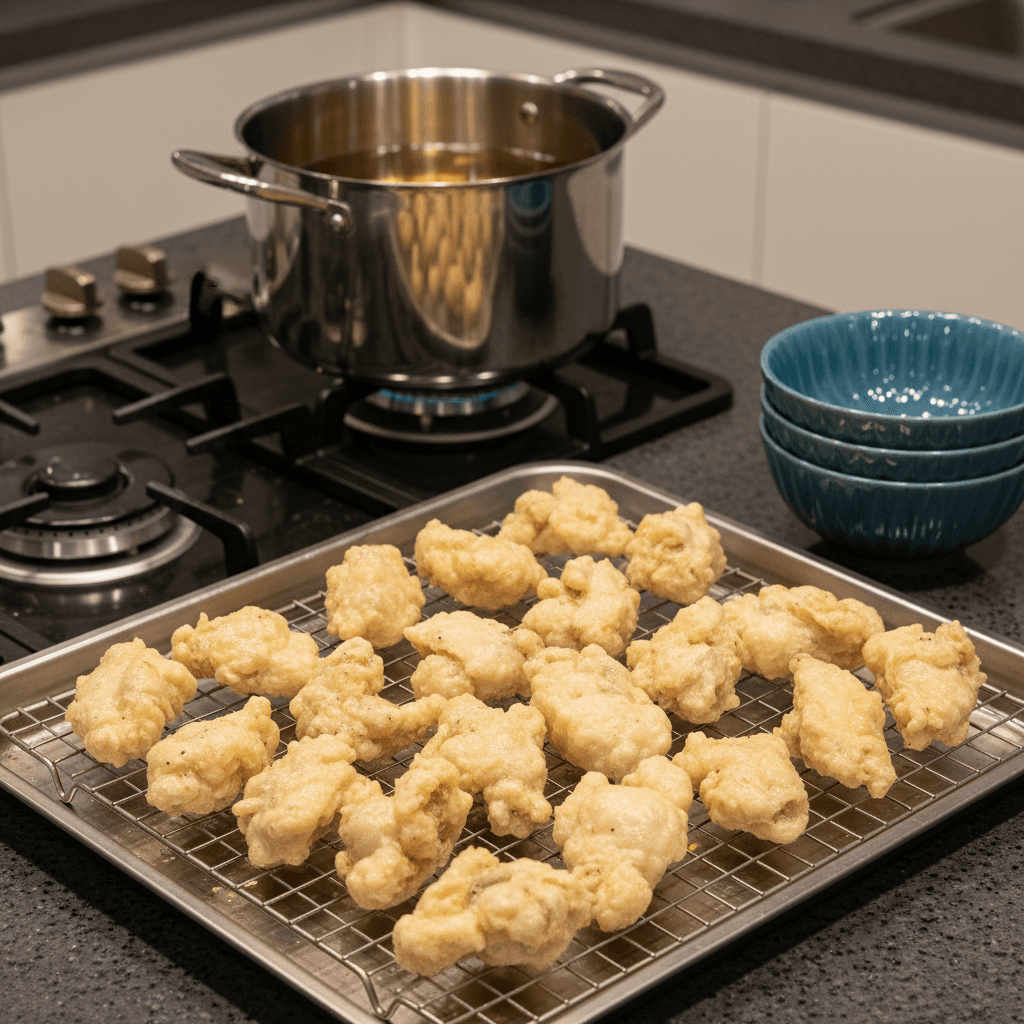
After the first fry: light golden and cooked through, but not yet crispy. - 5
Double frying is the Korean secret – this second fry creates crunch that defies physics.
- 6
Stir up that glossy red sauce. The sweet-spicy aroma is already making everyone curious.
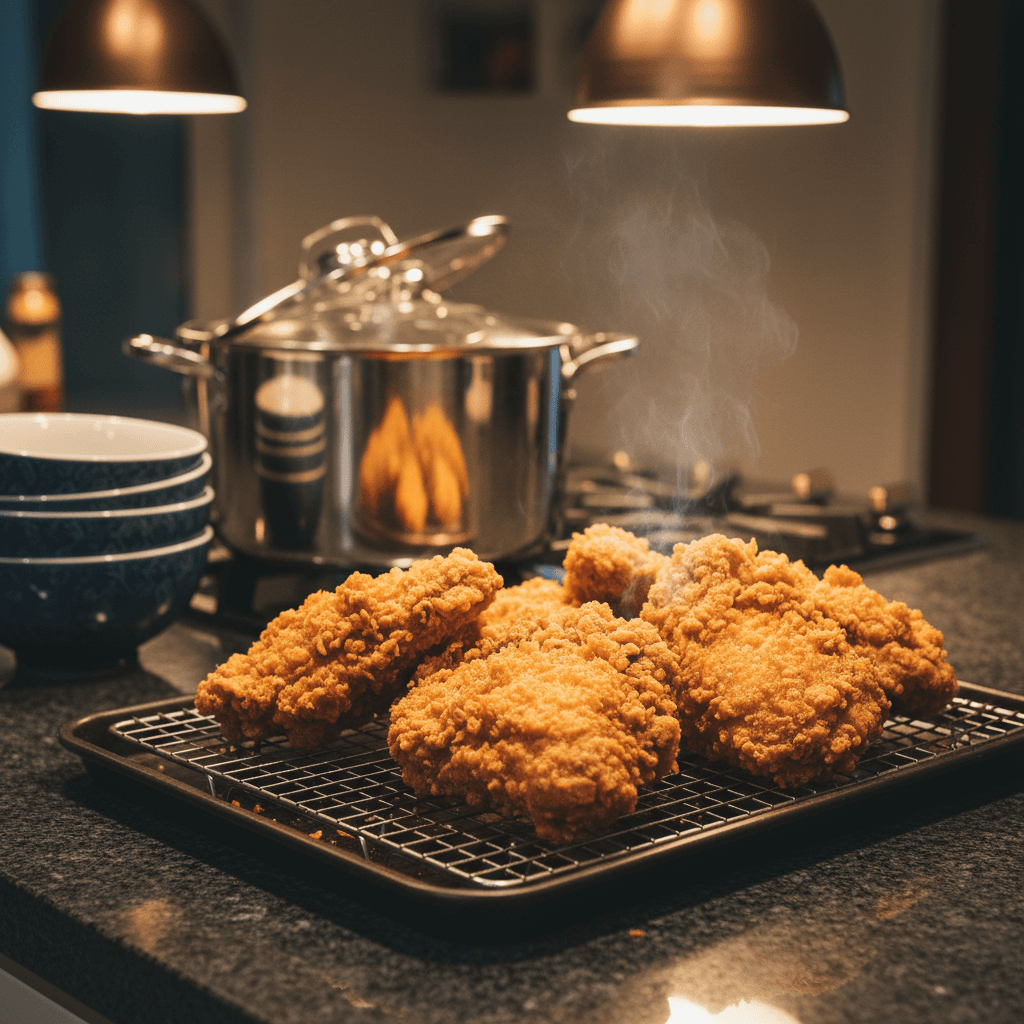
After the second fry: deep golden and shatteringly crispy! - 7
Toss that crispy chicken in the sauce – glossy, gorgeous, and all yours.
- 8
Sprinkle the sesame seeds like confetti. You've created a celebration.
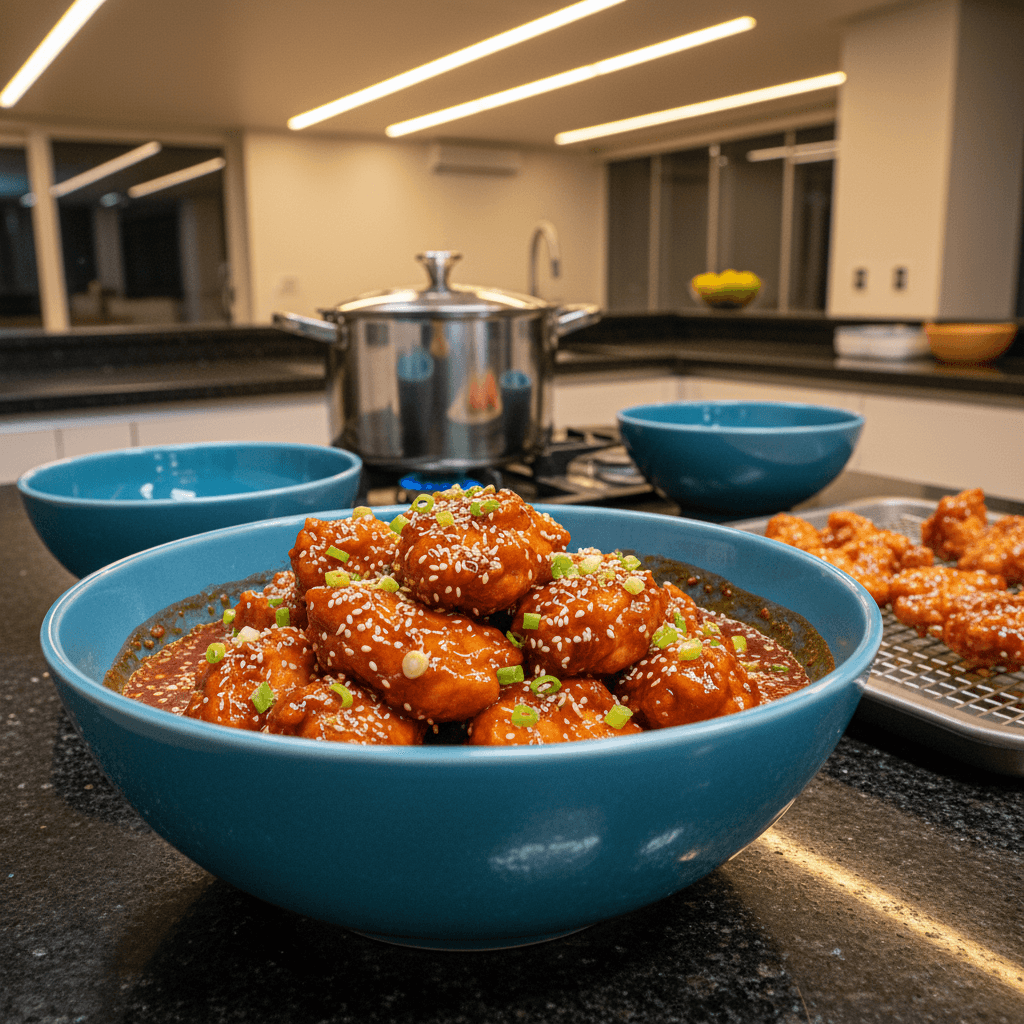
Tossed in that glossy gochujang sauce – irresistible!
📸 More Photos
💡 Why This Recipe?
When you're ready to celebrate or treat yourself, nothing beats the shatteringly crispy, perfectly sweet-spicy Korean fried chicken. It's a mood-lifting indulgence that makes any moment feel like a party.
⭐ Pro Tips
- 1Use a thermometer to monitor oil temperature – it's crucial for crispy results
- 2Cold water in the batter creates a lighter, crispier coating
- 3Let the chicken rest 5 minutes between fries – this allows moisture to redistribute and the coating to set
- 4Make sauce while doing the second fry so everything finishes together and chicken is sauced while hot
📌 Recipe Notes
🔄 Recipe Variations
- →Soy Garlic (Yangnyeom): Replace gochujang sauce with a glaze of 4 tbsp soy sauce, 2 tbsp honey, 6 minced garlic cloves, and a splash of rice wine
- →Sweet Chili: Use Thai sweet chili sauce instead of gochujang for a milder, tangier version
- →Air Fryer Version: Air fry at 380°F for 25 minutes, then 400°F for 5 minutes for extra crispiness
📦 Storage & Meal Prep
How to Store
Best eaten immediately for maximum crispiness. If you must store, keep chicken and sauce separate. Refrigerate chicken for up to 2 days and reheat in a 400°F oven for 10-15 minutes to re-crisp. Sauce keeps refrigerated for 1 week.
Make Ahead Tips
You can marinate the chicken overnight in a simple brine (1 tbsp salt per cup of water) for extra juicy meat. Make the sauce up to a week ahead and refrigerate. Mix the dry batter ingredients ahead, but add the water just before frying.
🥗 Nutrition Information
Per serving
❓ Frequently Asked Questions
Why do you fry Korean chicken twice?
Double frying is the Korean secret to extra crispy chicken. The first fry at lower temperature cooks the chicken through, while the second fry at higher temperature creates an ultra-crispy, shatteringly crunchy crust that stays crispy even when coated in sauce.
Can I bake this instead of frying?
Yes! Coat chicken in the batter and place on a wire rack over a baking sheet. Bake at 425°F (220°C) for 40-45 minutes, flipping halfway. It won't be quite as crispy as fried, but still delicious. For extra crunch, broil for the last 2-3 minutes.
What can I substitute for gochujang?
If you can't find gochujang, mix 1 tbsp miso paste with 1 tbsp sriracha and 1 tsp sugar for a similar flavor profile. You can also use sriracha alone mixed with a bit of honey, though it won't have the same depth of fermented flavor.
How do I keep the chicken crispy?
The keys are: 1) Pat chicken very dry before battering, 2) Use cold water in the batter, 3) Don't overcrowd the oil (fry in batches), 4) Rest chicken on a wire rack (not paper towels), and 5) Sauce and serve immediately after the second fry.
🔗 You Might Also Like
🧭 Explore More Meal Ideas
📖 From Our Blog
Comfort Food for Rainy Days: 8 Cozy Recipes to Warm Your Soul
Rain tapping on the windows? Here are 8 soul-warming recipes perfect for curling up with on those grey, drizzly days.
What to Eat When It's Cold: 10 Warming Recipes for Winter Days
When it's freezing outside, you need food that warms your soul. These 10 recipes are designed to make your kitchen smell amazing and keep you cozy all winter long.
Date Night Dinner Recipes: 8 Impressive Meals to Cook at Home
Skip the reservation, impress your date. These 8 recipes deliver restaurant-quality results with home-kitchen simplicity.
Let AI Pick Your Perfect Meal
Tell us your mood, and we'll recommend exactly ONE meal for you. No endless scrolling, no decision fatigue.