Easy Pad Thai
“The Thai street food classic made easy at home. Chewy noodles, crunchy peanuts, and that iconic sweet-tangy sauce – it's a party in your mouth.”
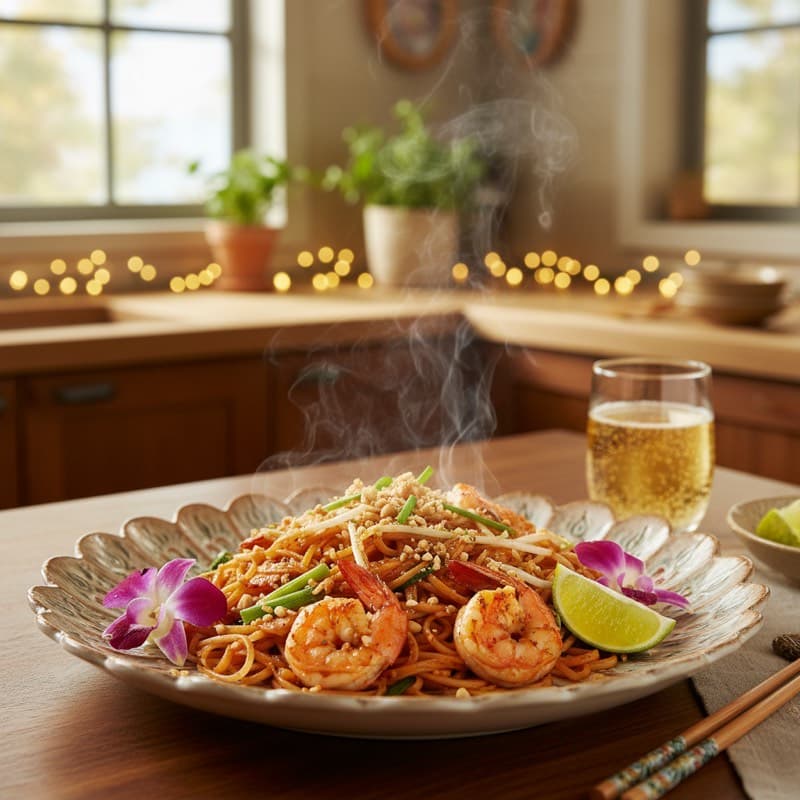
🤖 Why This Recipe Matches Your Mood
Pad Thai is that perfect combination of sweet, sour, salty, and savory that just hits different. When you want to feel like you're treating yourself, this delivers.
Pad Thai might be Thailand's most famous culinary export, and for good reason. Those chewy rice noodles tangled with crunchy bean sprouts, bright lime, and that impossibly balanced sweet-sour-salty-savory sauce – it's a dish that hits every pleasure center in your mouth simultaneously.
But here's what took me years to learn: the pad Thai you get at most restaurants isn't quite authentic. Real Thai street pad Thai is lighter, more nuanced, and actually pretty easy to make at home once you understand a few key principles. This recipe bridges the gap between takeout convenience and street-vendor authenticity.
Understanding the Pad Thai Flavor Balance
Thai cooking is built on balancing four flavors: sweet, sour, salty, and spicy. Pad Thai showcases this philosophy perfectly, though it leans more on the first three.
Tamarind provides the sour – a fruity, complex acidity that's warmer than lime or vinegar. Fish sauce brings the salty and umami. Palm sugar (or brown sugar) adds sweetness that caramelizes slightly in the hot wok. These three ingredients, in the right proportions, create that signature pad Thai taste you can't quite describe but instantly recognize.
The key is tasting and adjusting. Your tamarind might be more sour than mine. Your fish sauce might be saltier. Make the sauce, taste it, and tweak until it makes you want to keep dipping your finger back in.
The Noodle Situation (It's Important)
Rice noodles are not interchangeable with other noodles, and even among rice noodles, width matters. Traditional pad Thai uses flat rice sticks about a quarter-inch wide – not thin vermicelli, not wide pappardelle-style noodles.
The soaking technique is crucial. Most recipes say 'soak in warm water until soft.' This leads to mushy pad Thai. What you want is noodles that are still slightly stiff – they'll finish cooking in the wok. Think al dente for pasta. If your noodles feel completely soft in the water, they're already oversoaked.
Room temperature water takes longer but gives you more control. Hot water can make the outer layer mushy while the inside stays hard. Patience with noodles pays off.
Wok Hei: The Breath of the Wok
If your pad Thai tastes good but doesn't taste quite like restaurant pad Thai, you're probably missing wok hei – literally 'the breath of the wok.' It's that slightly smoky, charred flavor that comes from cooking over extremely high heat.
Home stoves can't match commercial wok burners, but you can get close. Use the highest heat your stove can produce. Let the wok get smoking hot before adding oil. Don't overcrowd – cook in batches if needed. And keep things moving – food should sizzle aggressively, not simmer.
A cast iron skillet works better than a non-stick pan if you don't have a proper wok. Non-stick pans can't handle the heat needed for good wok hei and may release harmful fumes at very high temperatures.
🧠 The Science Behind It
Pad Thai is a study in contrast that keeps your palate engaged. Soft noodles meet crunchy peanuts and bean sprouts. Sweet sauce gets cut by sour lime. Rich egg offsets the lean noodles. Every bite is slightly different from the last.
There's also chemistry at work. The Maillard reaction from high-heat cooking creates hundreds of flavor compounds. Fish sauce contributes glutamates – the same umami compounds found in aged cheese and soy sauce. Your brain processes this complexity as 'delicious.'
The dish also satisfies because it's carb-forward but not heavy. Rice noodles are lighter than wheat pasta, and the vegetables add bulk without calories. You feel full but not stuffed.
🌍 Cultural Background
Pad Thai's history is surprisingly political. The dish was promoted by Thai Prime Minister Plaek Phibunsongkhram in the 1930s and 40s as part of a nation-building campaign. Rice noodles were pushed over Chinese-style wheat noodles to reduce rice consumption during wartime while still maintaining Thai identity.
Today, pad Thai is everywhere in Thailand – from street carts charging a dollar to upscale restaurants serving fancier versions. But the street cart versions remain the gold standard. A truly great pad Thai comes from a vendor who has made the same dish thousands of times, their movements automatic, their proportions perfect.
⚡ Quick Tips Before You Start
- ✓Soak noodles until pliable but still slightly firm – not fully soft
- ✓Get your wok screaming hot before adding anything
- ✓Have all ingredients prepped and within arm's reach before cooking
- ✓Cook in batches rather than overcrowding the wok
🍽️ Serving Suggestions
Pad Thai is traditionally served with fresh lime wedges, chopped peanuts, and a small dish of condiments: chili flakes, fish sauce, sugar, and vinegar. This allows each person to adjust the balance to their taste.
Fresh vegetables like cucumber slices, banana blossom, or raw bean sprouts often accompany the dish, providing cooling crunch between bites.
🍷 Perfect Pairings
Thai iced tea is the classic pairing – its sweetness and creaminess cool the palate between bites. A cold lager (Singha or Chang if you want authenticity) works beautifully, as does sparkling water with lime.
For wine, try an off-dry Riesling. The slight sweetness complements the tamarind while the acidity matches the lime. Avoid heavy reds – they'll compete with the dish's complexity.
Making pad Thai at home was my cooking confidence breakthrough. It seemed so complex at restaurants, but once I understood the sauce balance and noodle timing, everything clicked. Now it's my Friday night go-to – a celebration of the week ending that takes less time than ordering delivery.
— The mealideas.ai Team
📋 Easy Pad Thai
📝 Ingredients
- •8 oz rice noodles
- •1 lb shrimp or chicken, sliced
- •3 eggs, beaten
- •1 cup bean sprouts
- •4 green onions, chopped
- •1/4 cup roasted peanuts, crushed
- •3 tbsp fish sauce
- •2 tbsp tamarind paste
- •2 tbsp brown sugar
- •1 tbsp lime juice
- •3 cloves garlic, minced
- •Lime wedges and cilantro for serving
👨🍳 Instructions
- 1
Noodles soak. Use this time to prep everything else.
- 2
The sauce – sweet, salty, tangy. This is the soul of pad Thai.
- 3
Protein gets that wok char. You're already smelling Thailand.
- 4
Eggs scramble fast. Don't overthink it.
- 5
Noodles and sauce meet. Watch them drink it all up.
- 6
Toss, toss, toss. Everything comes together.
- 7
Protein and crunch go back in. This is the final stretch.
- 8
Peanuts, lime, cilantro. You just made takeout-level pad Thai. At home.
💡 Why This Recipe?
Pad Thai is that perfect combination of sweet, sour, salty, and savory that just hits different. When you want to feel like you're treating yourself, this delivers.
⭐ Pro Tips
- 1Soak rice noodles in room temperature water, not hot water – hot water can make them too soft and prone to breaking
- 2Have all ingredients prepped and within reach before you start cooking – pad thai comes together fast
- 3Cook in batches if needed – overcrowding the wok drops the temperature and steams instead of stir-fries
- 4The sauce should be balanced: if too sour add sugar, if too sweet add fish sauce or lime, if too salty add more tamarind
🔄 Recipe Variations
- →Vegetarian Pad Thai: Replace fish sauce with soy sauce, use firm tofu, and add more vegetables like broccoli and carrots
- →Pad Thai with Crab: Use lump crab meat instead of shrimp for a special occasion twist
- →Spicy Pad Thai: Add fresh Thai chilies or sambal oelek to the sauce for extra heat
📦 Storage & Meal Prep
How to Store
Pad thai is best enjoyed fresh but can be refrigerated for up to 2 days. Noodles will soften further when stored. Reheat in a hot wok or skillet with a splash of water to revive the texture. Don't microwave – it makes noodles rubbery.
Make Ahead Tips
Prep all ingredients ahead: make the sauce, soak and drain noodles (toss with oil to prevent sticking), prep vegetables and protein. Store separately in the refrigerator. When ready, the actual cooking takes just 10-15 minutes.
🥗 Nutrition Information
Per serving
❓ Frequently Asked Questions
What is tamarind paste and where do I buy it?
Tamarind paste is made from tamarind fruit and provides pad thai's signature sweet-sour flavor. Find it in the Asian food aisle of most grocery stores or at Asian markets. If unavailable, substitute with a mix of lime juice and brown sugar (1 tbsp each), though the flavor will be slightly different.
Can I substitute rice noodles with another type of noodle?
Flat rice noodles are traditional, but lo mein noodles or even linguine can work in a pinch. Ramen noodles (without the seasoning packet) also work. The texture and authentic taste won't be the same, but it will still be delicious.
Why is my pad thai mushy?
Over-soaking the noodles is the most common cause. They should be softened but still slightly firm before stir-frying – they'll finish cooking in the wok. Also, don't overcrowd the pan and make sure your wok is hot. Too much moisture = steamed noodles.
What can I substitute for fish sauce?
Soy sauce with a splash of lime juice can substitute, though you'll lose some of the funky depth fish sauce provides. Coconut aminos work for a soy-free option. For vegetarian, use vegetarian fish sauce or soy sauce with a pinch of seaweed.
🔗 You Might Also Like
🧭 Explore More Meal Ideas
📖 From Our Blog
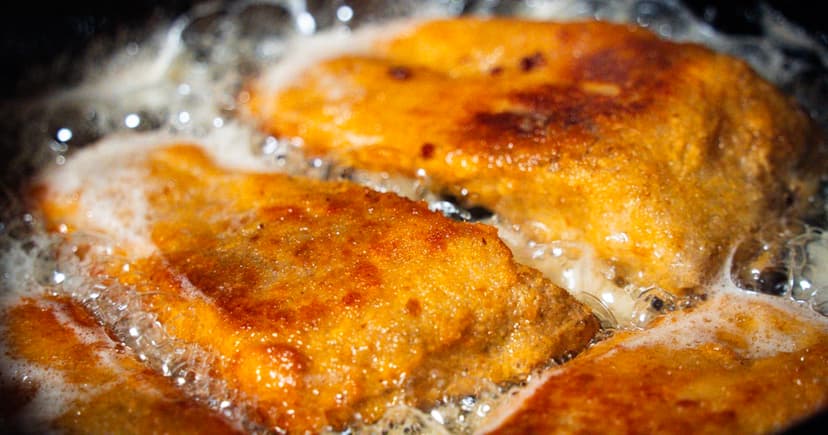
Comfort Food for Rainy Days: 8 Cozy Recipes to Warm Your Soul
Rain tapping on the windows? Here are 8 soul-warming recipes perfect for curling up with on those grey, drizzly days.
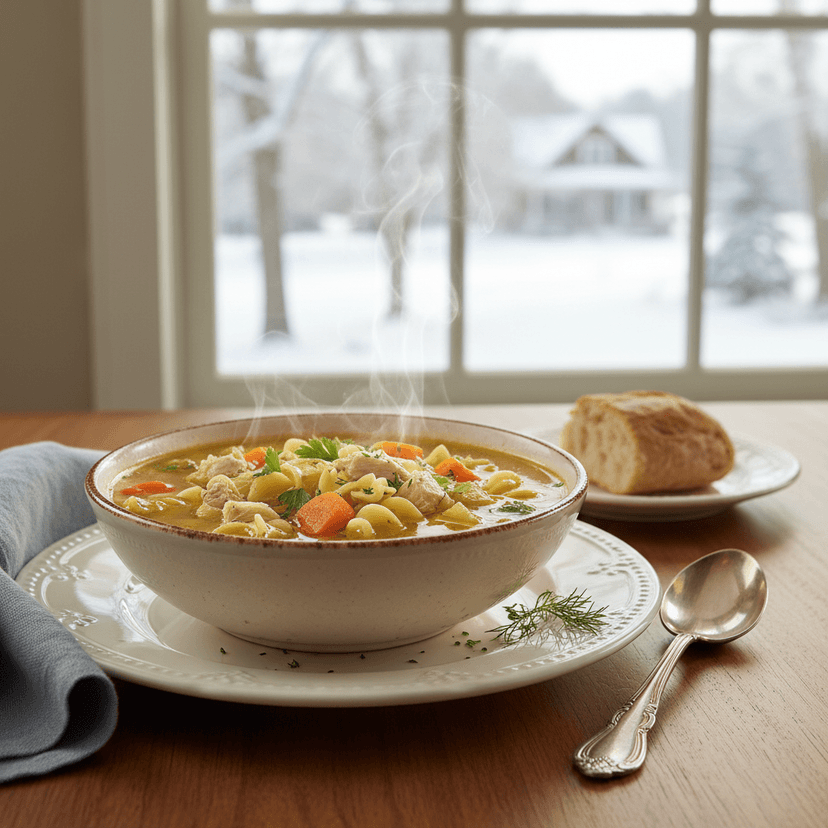
What to Eat When It's Cold: 10 Warming Recipes for Winter Days
When it's freezing outside, you need food that warms your soul. These 10 recipes are designed to make your kitchen smell amazing and keep you cozy all winter long.
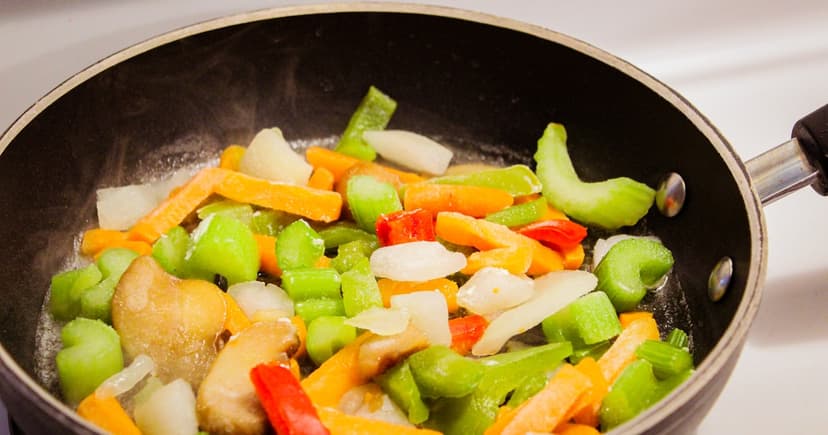
10 Easy Weeknight Dinners When You're Too Tired to Cook
Too tired to cook? We get it. Here are 10 no-brainer dinner ideas that practically make themselves, perfect for those exhausting weeknights.
Let AI Pick Your Perfect Meal
Tell us your mood, and we'll recommend exactly ONE meal for you. No endless scrolling, no decision fatigue.